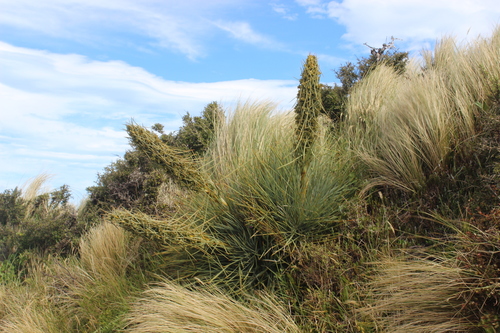
Physospermum cornubiense
(L.) DC.
Barestem biscuitroot

iNaturalist · cc-by
(c) Drepanostoma, some rights reserved (CC BY), uploaded by Drepanostoma
(c) Drepanostoma, some rights reserved (CC BY), uploaded by Drepanostoma
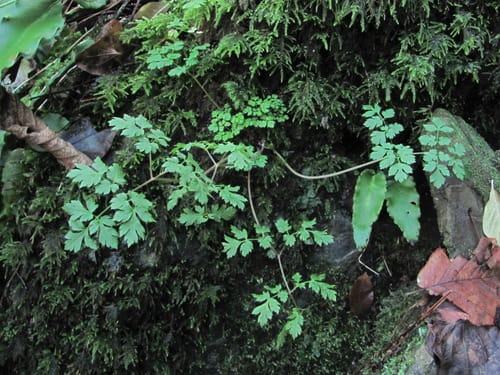
iNaturalist · cc-by-nc
(c) Gennadiy Okatov, some rights reserved (CC BY-NC)
(c) Gennadiy Okatov, some rights reserved (CC BY-NC)
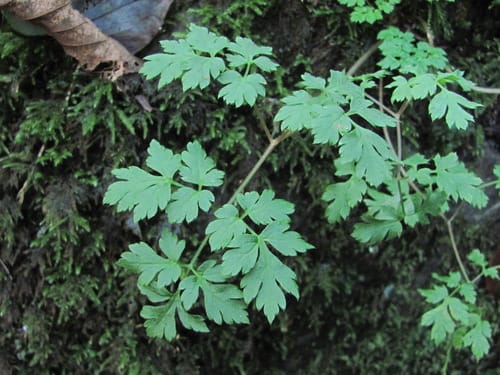
iNaturalist · cc-by-nc
(c) Gennadiy Okatov, some rights reserved (CC BY-NC)
(c) Gennadiy Okatov, some rights reserved (CC BY-NC)
What to Eat
Edible parts: Flowers - drink, Fruit - flavouring, Leaves - tea, Stem
The flowers are used to make a drink and in liqueurs. The fruit is used as flavouring, particularly in cakes made with chestnuts. The leaves can be made into tea, and the stems are edible.
Where to Find It
It is a temperate and Mediterranean climate plant.
Europe, Iran, North America, Portugal, Spain, USA,
Countries: Andorra, Antigua & Barbuda, Albania, Austria, Bosnia & Herzegovina, Barbados, Belgium, Bulgaria, Bahamas, Belarus, Belize, Canada, Switzerland, Costa Rica, Cuba, Cyprus, Czechia, Germany, Denmark, Dominica, Dominican Republic, Estonia, Spain, Finland, France, United Kingdom, Grenada, Greece, Guatemala, Honduras, Croatia, Haiti, Hungary, Ireland, Iran, Iceland, Italy, Jamaica, St Kitts & Nevis, St Lucia, Liechtenstein, Lithuania, Luxembourg, Latvia, Monaco, Moldova, Montenegro, North Macedonia, Malta, Mexico, Nicaragua, Netherlands, Norway, Panama, Poland, Puerto Rico, Portugal, Romania, Serbia, Russia, Sweden, Slovenia, Slovakia, San Marino, El Salvador, Trinidad & Tobago, Ukraine, United States, St Vincent
How to Identify
A temperate and Mediterranean herb in the carrot family (Apiaceae) with edible flowers, fruit, leaves, and stems.
Names & Synonyms
Ghaziaghi
Chaerophyllum aquilegifolium (All.) Koso-Pol.Cogswellia nudicaulis (M.Bieb.) M.E.JonesCoriandrum aquilegiifolium All.Danaa aquilegifolia All.Danaa cornubiensis (L.) BurnatDanaa nudicaulis (M.Bieb.) Grossh.Danaa sylvatica Lag.Haenselera damaecornis Lag.Ligusticum aquilegifolium (All.) Willd.Ligusticum cornubiense L.Pastinaca nudicaulis (Pursh) Spreng.Peucedanum nudicaule (Pursh) Nutt. ex Torr. & A. GrayPhysospermum aquilegifolium (All.) W.D.J.KochPhysospermum commutatum Spreng.Physospermum danaa Schischk. ex N.I. RubtzovPhysospermum nudicaule (M.Bieb.) C.A.Mey.Pseudospermum commutatum GraySagapenon aquilegifolium (Willd.) Raf.Sison sylvaticum Brot.Smyrnium nudicaule M.Bieb.Smyrnium nudicaule Pursh
References (5)
- Beckstrom-Sternberg, Stephen M., and James A. Duke. "The Foodplant Database." http://probe.nalusda.gov:8300/cgi-bin/browse/foodplantdb.(ACEDB version 4.0 - data version July 1994) (As Cogswellia nudicaulis)
- Lim, T. K., Edible Medicinal and Non-Medicinal Plants Volume 7 Flowers (As Cogswellia nudicaulis)
- Mirdeilami, S. Z., et al, 2011, Ethnopharmacological survey of medicinal plants in Maraveh Tappeh region, north of Iran. Iranian Journal of Plant Physiology 2(1): 327‐338
- Pardo-de-Santayana et al, 2006, Diversity and selection of wild food plants. Proceedings of the IVth International Congress of Ethnobotany (ICEB) 2005) p 53
- Pardo-de-Santayana, M., et al, 2007, Traditional knowledge of wild edible plants used in the northwest of the Iberian Peninsula (Spain and Portugal): a comparative study. Journal of Ethnobiology and Ethnomedicine 2007, 3:27