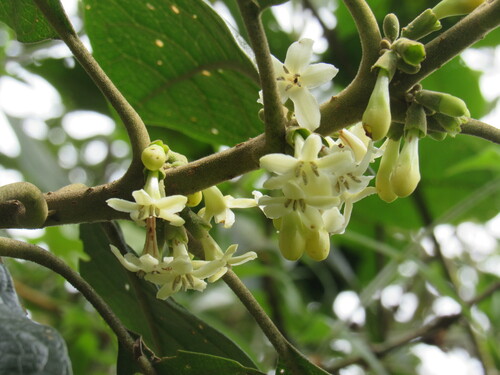
Sideritis scardica
Griseb.
Mountain tea, Ironwort
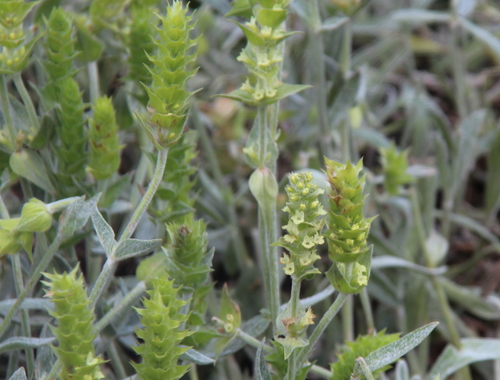
(c) jcorrie, some rights reserved (CC BY-NC)

(c) linnea_blomma, some rights reserved (CC BY-NC)
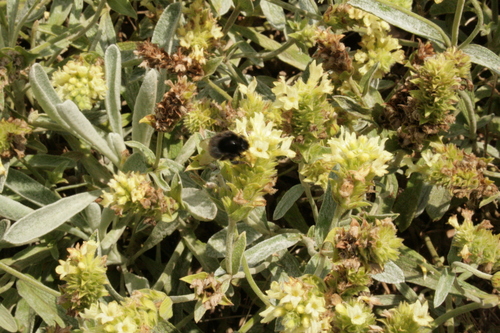
(c) Sotirios Liakas, some rights reserved (CC BY-NC), uploaded by Sotirios Liakas
What to Eat
Edible parts: Leaves - tea, Flowers - tea, Shoots
A tough Mediterranean herb, it is used to prepare tisanes — beverages made by infusing or decocting stems, leaves, and flowers in hot water — and is also used for its aromatic properties in local cuisines.
Where to Find It
It is a temperate plant. It grows at high altitudes in the Balkans. It grows in rocky mountain areas. It grows between 1,000 - 2,300 m above sea level.
Albania, Balkans, Bulgaria, Europe, Greece, Macedonia, Mediterranean, Serbia, Slovenia, Turkey, Türkiye,
How to Identify
A hardy perennial reaching 0.4 m (1ft 4in) tall by 0.2 m (0ft 8in) wide, hardy to UK zone 8 and not frost tender. Self-fertile with insect-pollinated flowers and attractive to wildlife. Thrives in light sandy, medium loamy, or heavy clay soils with preference for well-drained conditions and poor soil tolerance. Neutral to very alkaline pH suitable. Requires full sun and tolerates both dry and moist soil with strong drought resistance.
How to Grow
A short-lived herbaceous perennial which reproduces by seed, this plant is found in open, dry, grassy and stony meadows and rocky places on limestone shallow or eroded soils. It occurs on slopes predominantly with southern exposure and an incline of 5-30 degrees for maximum insolation, higher temperatures and dry conditions. Suitable for light (sandy) and medium (loamy) soils and prefers well-drained soil. Suitable pH: acid, neutral and basic (alkaline) soils. It cannot grow in the shade. It prefers dry or moist soil. It can be associated with different plant species, provided they have little competition. It was also found to be particularly associated with habitats dominated by Juniperus communis. The mass collection of generative shoots during the flowering phase combined with low germination of seeds has resulted in a significant population decline, at least in parts of its range, as the plant has been exploited for its herbal properties. Dislikes cold, wet winters. It is in flower from July to August. The flowers are hermaphrodite (have both male and female organs) and are pollinated by Insects.
Propagation: Seed
Medicinal Uses
Parts of the plant have been used in poultices or decoctions to treat skin irritations, inflammation, and joint pain, though internal use is unsafe due to the presence of saponins.
Other Uses
Makes a good ground cover for sun-baked spots, forming a decorative carpet of felted silver leaves. Also grown as an ornamental.
Wikipedia
Source ↗Sideritis scardica is a species of flowering plant in the family Lamiaceae. Commonly known as Greek mountain tea, it is a flowering plant species of Sideritis, native to Albania, Bulgaria, Greece (particularly in the area of Mount Olympus), Kosovo, and North Macedonia. It was first described in 1844.
Notes
It has medicinal uses.
Names & Synonyms
Makedonski chaj, Pazlak cayi, šarplaninski čaj, Sharplaninski chaj
References (4)
- Ertug, F, Yenen Bitkiler. Resimli Türkiye Florası -I- Flora of Turkey - Ethnobotany supplement
- http://www.botanic-gardens-ljubljana.com/en/plants
- Miskoska-Milevska, E. et al, 2020, Traditional uses of wild edible plants in the Republic of North Macedonia. PHYTOLOGIA BALCANICA 26(1): 155–162, Sofia, 2020 p 158
- World Checklist of Useful Plant Species 2020. Royal Botanic Gardens, Kew