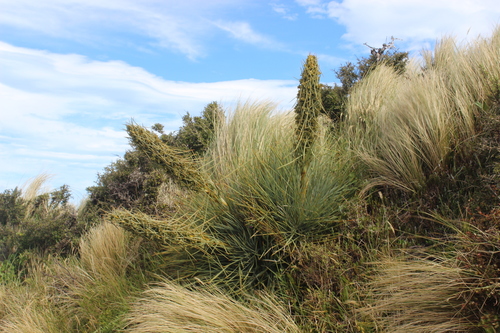
Dorema ammoniacum
D. Don
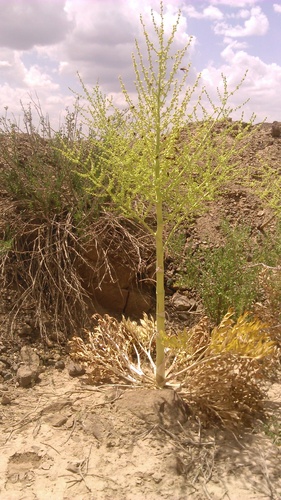
(c) Moosa, some rights reserved (CC BY-NC)
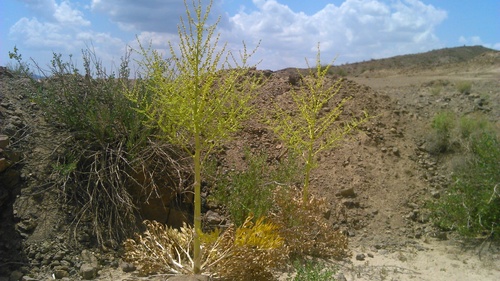
(c) Moosa, some rights reserved (CC BY-NC)
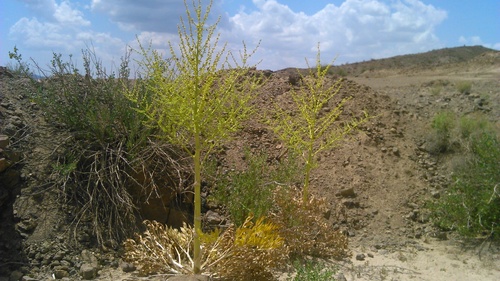
(c) Moosa, some rights reserved (CC BY-NC)
What to Eat
Edible parts: Seeds, Gum
No edible uses are known for this plant.
Where to Find It
It is a temperate plant.
Asia, Pakistan,
How to Identify
Perennial reaching 2.5m tall by 1m wide. Hermaphrodite flowers pollinated by insects; self-fertile. Grows in light, medium, or heavy soils; tolerates mildly acid to basic pH. Adapts to semi-shade or full sun with dry or moist soil conditions.
How to Grow
Easily grown in an ordinary garden soil. Prefers a well-drained to dry soil in a sunny position. This species is not hardy in all parts of Britain, it tolerates temperatures down to at least -5°c. A monocarpic species, growing for a number of years before it flowers but then dying after flowering. It is said to produce viable seed in this country.
Propagation: Sow seed in an outdoor seedbed in April, though sowing in autumn in a cold frame or greenhouse may give better results. Seed germinates in 2–6 weeks at 15°C. If seed is limited, sow in a pot in a cold frame, prick out seedlings into individual pots as soon as they are large enough to handle, and plant out into permanent positions in late spring of the following year.
Medicinal Uses
Ammoniacum has been used in Western herbal medicine for thousands of years. A gum resin is found in cavities within the stems, roots, and petioles, and often exudes naturally through holes made by beetles, though this is less pure than resin taken directly from the plant tissues. The resin is antispasmodic, carminative, diaphoretic, mildly diuretic, expectorant, stimulant, and vasodilatory, and can also be used as a poultice. It is taken internally chiefly for chronic bronchitis (particularly in the elderly), asthma, and catarrh. Externally, it is applied as a plaster for swollen joints and indolent tumours. The gum exudes as a milky liquid from holes cut in the stems, and is then pressed into blocks and ground into a powder.
Other Uses
A gum resin known as ammoniacum is collected from insect-damaged stems. Beyond its medicinal applications, it is used in perfumery and as a component of porcelain cement, as well as for making plasters.
Wikipedia
Source ↗Perennial reaching 2.5m tall by 1m wide. Hermaphrodite flowers pollinated by insects; self-fertile. Grows in light, medium, or heavy soils; tolerates mildly acid to basic pH. Adapts to semi-shade or full sun with dry or moist soil conditions.
Names & Synonyms
Jangli sonf
References (1)
- Tareen, N. M., et al, 2016, Ethnomedicinal Utilization of Wild Edible Vegetables in District Harnai of Balochistan Province - Pakistan. Pakistan Journal of Botany 48(3): 1159-1171