Coussarea hydrangeifolia
(Benth.) Benth. & Hook.f. ex Mull.Arg.
Hydrangea leaf coussarea
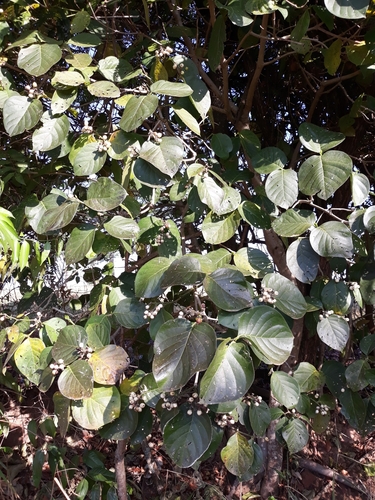
(c) Laurent Quéno, some rights reserved (CC BY-NC), uploaded by Laurent Quéno
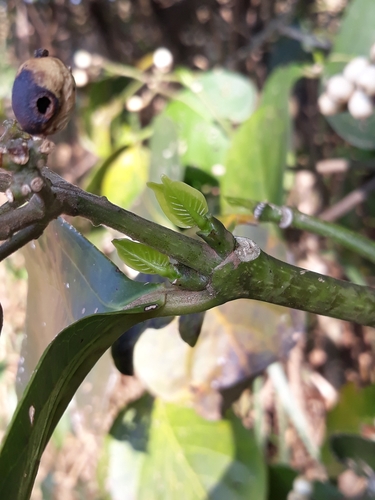
(c) Laurent Quéno, some rights reserved (CC BY-NC), uploaded by Laurent Quéno
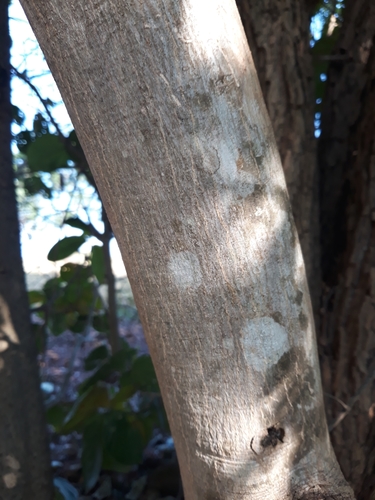
(c) Laurent Quéno, some rights reserved (CC BY-NC), uploaded by Laurent Quéno
What to Eat
Edible parts: Fruit, Seeds - coffee, Leaves
The fruit and leaves are eaten, and the seeds are used to make coffee.
Where to Find It
It is a tropical plant. It grows in rainforest and is best in moist, sandy soils.
Amazon, Bolivia, Brazil, Paraguay, Peru, South America,
How to Identify
A shrub or small tree. It can grow 5 m tall. The trunk is short and crooked. It is 15-25 cm across. The leaves are 15 cm long by 9 cm wide. The flowers are white. The fruit are small and white.
How to Grow
Grows best in a sunny position. Prefers a moist, sandy soil. Even when young, plants have a slow rate of growth.
Propagation: Seed - best sown as soon as it is ripe in a sunny position in a nursery seedbed. A germination rate that is normally less than 50% can be expected, with the seed sprouting within 40 - 60 days.
Other Uses
The wood is fine-textured, wavy-grained, moderately heavy, hard, with poor mechanical properties and moderately durable. Because of its small size, it is only used for purposes such as tool handles, crates and pestles. The wood is used for fuel and to make charcoal. Although slow-growing, the plant is a natural pioneer and provides food for the native fauna. It can be used as part of a mixed planting in reforestation schemes for restoring native woodland.
Names & Synonyms
Cha-parahuaio, False-quina, Fruta-de-anta, Hojoso, Marmelada-de-cachorro, Matico, Pau-terra-do-cerrado, Quina-branca
References (3)
- Bortolotto, I. M., et al, 2018, Lista preliminar das plantas alimenticias nativas de Mato Grosso do Sul, Brasil. Iheringia, Serie Botanica, Porto Alegre, 73 (supl.):101-116
- Grandtner, M. M. & Chevrette, J., 2013, Dictionary of Trees, Volume 2: South America: Nomenclature, Taxonomy and Ecology. Academic Press p 172
- www.colecionandofrutas.org


