Carapa guianensis
Aubl.
Andiroba, Guianas crabwood

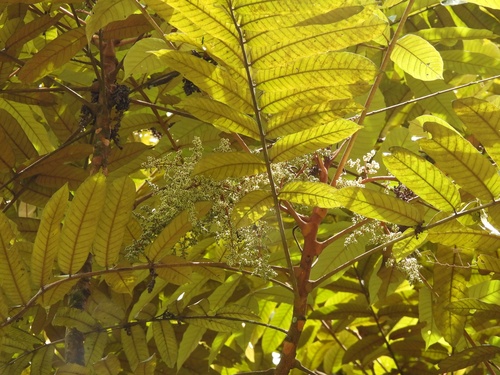
(c) Sébastien SANT, some rights reserved (CC BY-NC), uploaded by Sébastien SANT

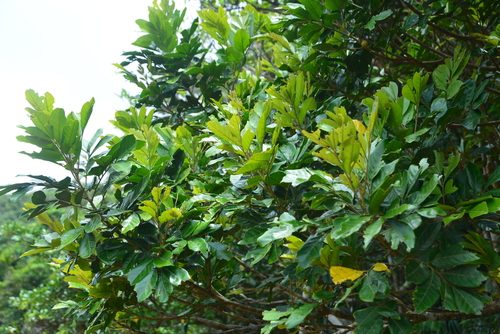
(c) Sébastien SANT, some rights reserved (CC BY-NC), uploaded by Sébastien SANT

(c) Sébastien SANT, some rights reserved (CC BY-NC), uploaded by Sébastien SANT
What to Eat
Edible parts: Medicine, Fruit
An oil is extracted from the seeds, which contain up to 70% oil. This oil should not be consumed as it is poisonous in quantity. See medicinal uses for details of its applied uses.
Known Hazards
Where to Find It
It is a tropical plant. It grows in seasonally flooded forests.
Amazon, Belize, Bolivia, Brazil, Central America, Colombia, Costa Rica, Cuba, Dominica, Dominican Republic, Ecuador, Grenada, Guadeloupe, French Guiana, Guatemala, Guyana, Honduras, Leeward Is., Martinique, Nicaragua, Panama, Peru, Puerto Rico, South America, Suriname, Trinidad-Tobago, Venezuela, West Indies, Winward Is.,
How to Identify
A tree. It grows 30 m tall. It can have buttresses. The trunk can be 60-90 cm across. The leaves are alternate and the leaflets are opposite.
How to Grow
A plant of the moister, lowland tropics, usually found at elevations below 700 metres but occasionally found as high as 1,000 metres. It grows in areas where the annual rainfall is above 3,000 mm and the temperature ranges between 20 - 35°c. Plants generally grow in moister soils and are tolerant of periodic flooding. They are moderately tolerant of shade, but full overhead light is required for fast growth. Young plants produce taproots but the trees tend to become surface rooted as they grow older. In South America, the tree showed a mean annual diameter increment of 1.6 - 2 metres in 25-year-old plantations. In swamp forests, trees can reach felling size in 20 - 25 years; at higher elevations probably in 40 - 60 years. Flowering period depends heavily on the climate but is usually concentrated in one short period each year. Pollination is probably by insects; the trees are often found swarming with ants visiting extrafloral nectaries at shoot apices and leaflet tips. Usually only 1 - 2 fruits in an inflorescence mature in 8 - 12 months. A large tree may produce 750 - 4,000 seeds per year, but seed production may be almost zero in unfavourable years. The seeds float and are thus dispersed by water, but are also scatter-hoarded by agoutis and occasionally by pigs. Trees coppice freely and are resistant to fire
Propagation: Fresh seed germinates best, with germination rates declining as the seed dries out. Seed should be sown on the surface or shallowly covered in moist soil. Fresh seed germinates in 19–21 days, which can be reduced to 6–7 days if the seed is scarified first. Germination rates of fresh seed are often 100%. Early nursery growth is moderately fast, with seedlings potentially reaching 0.5m in the first year. Roots of one-year-old seedlings are pruned at approximately 15cm while still in the nursery bed; once new rootlets begin to develop, the plant is uprooted and planted out. Seed can only be stored for a short time: germination rates of 100% have been recorded in seed two months old, but no germination occurred after three months of open storage at 24–31°C. No seeds survived seven months of storage in paper bags at 12°C, and viability is halved in fresh seeds sealed in polythene bags at the same temperature after seven months. Large cuttings can be used when planted in swampy soil.
Medicinal Uses
The bark contains tannins and a bitter-tasting alkaloid, carapine. It is astringent, bitter, and febrifuge, and is used internally to treat malaria, stomach aches, diarrhoea, dysentery, and rheumatism. The stem bark is applied externally as a wash for a wide range of skin complaints, including the spots of chickenpox and measles, eczema, ulcers, burns, wounds, and sores. Leaves boiled in water are used as a wash on itchy skin, wounds, and persistent ulcers. A decoction of the fruit rind is taken orally for fevers and intestinal worms. A cream-coloured, intensely bitter oil of high acidity and very unpleasant smell, known as carapa oil, is extracted from the seeds. This oil is anti-inflammatory, demulcent, and soothing. A decoction is taken orally to treat hepatitis and tetanus, and it is used for a range of pulmonary conditions including a hacking cough, bronchial tract discomfort, and lung problems. Applied externally, it is used as a skin lotion and softener, particularly for children with thrush and dried, cracked skin, and to treat eczema, ringworm, running sores, pain, swelling, and itching. It is applied three times daily to treat painful piles, rubbed onto a painful stomach, and used to reduce pus-filled abscesses. Mixed with anatta paste (Bixa orellana), it is applied to the hair and skin to repel mosquitoes, sand fleas, ticks, lice, and other biting insects. A drop of the oil combined with a drop of red lavender is used to treat thrush in children. The grated nut mixed with hot water is drunk as a treatment for malaria, diarrhoea, dysentery, and to reduce excessive menstrual flow. Applied externally, the grated nut is mixed with palm oil and used as an analgesic for muscular aches and pains, as an antifungal, as a treatment for dry skin, sores, and eczema, and for relieving itches caused by measles and chickenpox.
Other Uses
The tree is suitable for planting in soil fertility restoration schemes. A non-drying oil from the seed is used as a lamp oil and for making soap and candles; it should not be consumed as it is poisonous. The seed oil is also used as a skin and hair ointment, protecting against ticks, sandflies, eyeflies, mosquitoes, and other insects, and is massaged into the scalp to promote strong, glossy hair. The oil has insecticidal properties. The bark contains 1–10% tannins. The timber is recognised in two forms: Andiroba Vermelha, or Red or Hill Crabwood, comes from trees on higher, well-drained land and produces heavier, superior-quality wood that does not float. Andiroba Branca, or White Crabwood, comes from trees in swampy locations and produces lighter, lower-quality wood that floats. The heartwood is reddish-brown and not clearly demarcated from the 3–5cm wide sapwood band. The texture is medium with a straight or interlocked grain. The wood is moderately soft to moderately hard, strong, moderately tough, of medium weight, and moderately durable with some resistance to fungi and termites, though susceptible to dry wood borers. It seasons somewhat slowly with a high risk of checking but only a slight risk of distortion, and is moderately stable once dry. It works well with ordinary tools, though interlocked grain can cause difficulties when planing; it has a slight tendency to split when nailed or screwed, so pre-boring is recommended. It glues well and polishes satisfactorily. Primary uses include high-quality furniture and cabinetwork, stairs, flooring, and veneer for furniture, interior work, and plywood. It is also used for masts, building material, boxes and crates, and as a substitute for okoumé (Aucoumea klineana) and walnut (Juglans regia). In Colombia it is favoured by shoemakers for shoe pieces. The wood is also suitable for pulp and paper production.
Wikipedia
Source ↗Carapa guianensis is a species of tree in the family Meliaceae, also known by the common names andiroba or crabwood.
Production
Plants flower August to October and produce fruit January to April.
Notes
The oil from the seeds is used as an anti-inflammatory medicine in the Amazon.
Names & Synonyms
Acajou, Acuju, Andiroba, Aray, Bateo, Cabirma de Guiana, Camacari, Caobilla, Carapa rouge, Carapai, Cedro bateo, Cedro giino, Cedro macho, Figueroa, Guino, Karaba, Masabalo, Mazabolo, Najesi, Nazasi, Requia, Saba, Tanca obiala, Tangara, Tangarillo, Yandiroba
References (6)
- Barfod, A. S. & Kvist, L. P., 1996, Comparative Ethnobotanical Studies of the Amerindian Groups in Coastal Ecuador. The Danish Academy of Sciences and Letters. p 78
- Grandtner, M. M. & Chevrette, J., 2013, Dictionary of Trees, Volume 2: South America: Nomenclature, Taxonomy and Ecology. Academic Press p 97
- Kew Plants of the World Online
- Shanley, P., et al, 2010, Frutiferas e Plantas Uteis na Vida Amazonica. Cifor, Brazil. p 45
- Shanley, P., et al, (Eds.) 2011, Fruit Trees and useful plants in Amazonian Life. FAO (English edition) p 54
- World Checklist of Useful Plant Species 2020. Royal Botanic Gardens, Kew