Sphaerococcus coronopifolius
Stackhouse
Berry wart cress
SphaerococcaceaeSeaweed

iNaturalist · cc-by
(c) Bernard Picton, some rights reserved (CC BY), uploaded by Bernard Picton
(c) Bernard Picton, some rights reserved (CC BY), uploaded by Bernard Picton

iNaturalist · cc-by
(c) Golfopolikayak, some rights reserved (CC BY), uploaded by Golfopolikayak
(c) Golfopolikayak, some rights reserved (CC BY), uploaded by Golfopolikayak
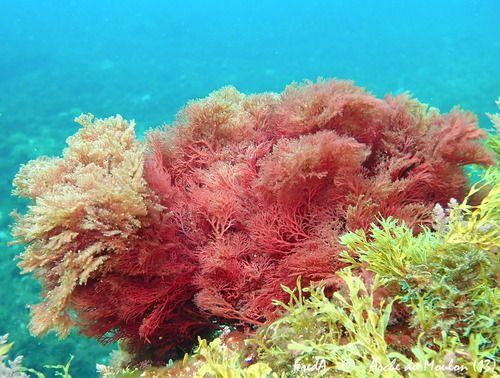
iNaturalist · cc-by-nc
(c) Frédéric ANDRE, some rights reserved (CC BY-NC), uploaded by Frédéric ANDRE
(c) Frédéric ANDRE, some rights reserved (CC BY-NC), uploaded by Frédéric ANDRE
What to Eat
Edible parts: Algae, Seaweed
The whole algae/seaweed is edible.
Where to Find It
It is a Mediterranean climate plant.
Adriatic, Atlantic Ocean, Britain, Canary Islands, Europe, France, Greece, Ireland, Italy, Mediterranean, Netherlands, Portugal, Scandinavia, Spain, Turkey, Türkiye,
Countries: Andorra, Albania, Austria, Bosnia & Herzegovina, Belgium, Bulgaria, Belarus, Switzerland, Cyprus, Czechia, Germany, Denmark, Algeria, Estonia, Egypt, Spain, Finland, France, United Kingdom, Greece, Croatia, Hungary, Ireland, Israel, Iceland, Italy, Lebanon, Liechtenstein, Lithuania, Luxembourg, Latvia, Libya, Morocco, Monaco, Moldova, Montenegro, North Macedonia, Malta, Netherlands, Norway, Poland, Portugal, Romania, Serbia, Russia, Sweden, Slovenia, Slovakia, San Marino, Syria, Tunisia, Turkey, Ukraine
How to Identify
A seaweed found in Mediterranean climate regions, belonging to the Sphaerococcaceae family.
Names & Synonyms
Fucus coronopifolius Goodenough & WoodwardRhynchococcus coronopifolius (Stackhouse) Kutzingand others
References (1)
- Pereira, L., Edible Seaweeds of the World. CRC Press.