Halimeda incrassata
J. Ellis) J. V. Lamouroux
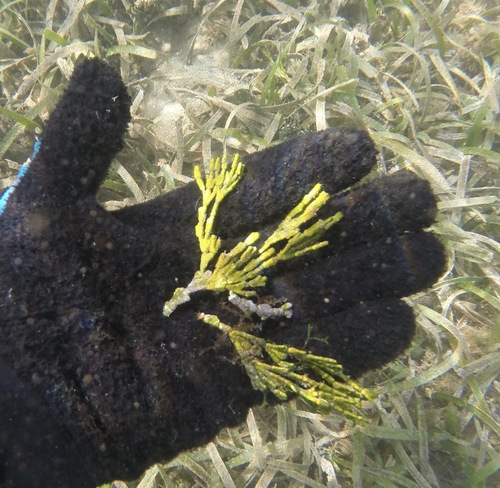
(c) Sarka Martinez, some rights reserved (CC BY-NC-SA), uploaded by Sarka Martinez

(c) James K. Wetterer, some rights reserved (CC BY-NC)
What to Eat
Edible parts: Algae, Seaweed
Methanol and dimethyformamide extracts of Halimeda opuntia have been observed to have antibacterial properties against some species of microorganisms, including Saccharomyces cerevisiae, Escherichia coli, Bacillus subtilis, and most significantly, Staphylococcus aureus. Halimeda opuntia ethanol extract exhibited activity against hepatitis C virus (HCV) due to polymerase inhibitory (HCV-796) binding sites based on molecular docking simulation. Methanolic extracts of Halimeda macroloba have recently been found to exhibit cytotoxicity towards MCF-7 and HT-29 cells, which are derived from human breast cancer cell lines and colon cancer lines, respectively. These results therefore suggest the genus' potential for cultivation as a food source. An experiment on rats showed that free phenolic acids of Halimeda monile have antioxidant properties which could aid in protecting against liver problems. Halimeda tuna appears to be used as fodder in the Philippines.
Where to Find It
It is a tropical and subtropical plant.
Asia, Australia, Caribbean, China, India, Indonesia, Japan, Micronesia, Pacific, Palau, Papua New Guinea, PNG, Philippines, Samoa, SE Asia, Singapore, Solomon Islands, Taiwan, Thailand, Vietnam,
How to Identify
A tropical and subtropical seaweed rich in calcium.
References (1)
- Pereira, L., Edible Seaweeds of the World. CRC Press.