Getonia floribunda
Roxb.
Ukshi

(c) Seema Merchant, some rights reserved (CC BY), uploaded by Seema Merchant
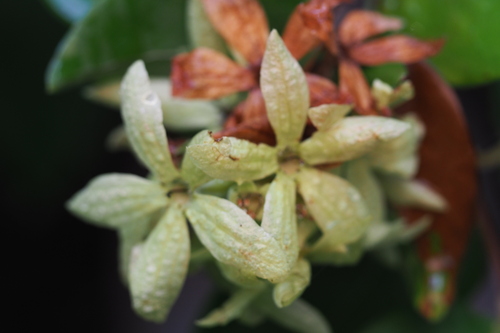
(c) Dharmendra Padhiyar, some rights reserved (CC BY-NC), uploaded by Dharmendra Padhiyar
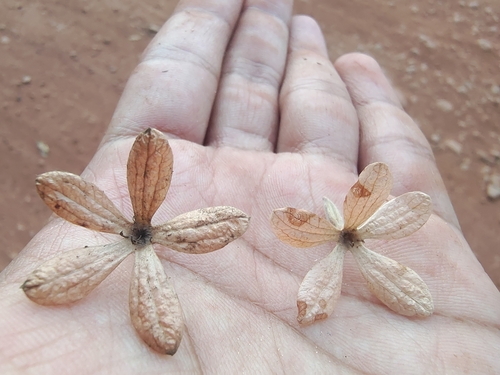
(c) Aditya Satish, some rights reserved (CC BY-NC), uploaded by Aditya Satish
What to Eat
Edible parts: Fruit - medicine, Vine - water
The ripe fruit are eaten. The vine can provide water.
Where to Find It
It is a tropical plant. It occurs in the Western Ghats in India.
Asia, Bangladesh, Cambodia, China, India, Laos, Malaysia, Myanmar, SE Asia, Singapore, Thailand, Vietnam,
How to Identify
A large climbing shrub. It can be 5-10 m long. The vines are 5-10 cm across. The bark is grey. The branches have thick fluffy layers in the surface. The leaves are oval and 5-12 cm long. New branches are hairy and rust coloured. The flowers are in dense clusters at the ends of branches. The fruit are fluffy and 8 mm long. They have 5 edges.
Medicinal Uses
Ukshi is revered as a life-saver by the forest dwellers who regularly depend on this vine during summer when streams dry up. Sections of the vine store water, which people often use to quench their thirst. The leaves are bitter, astringent, laxative, anthelmintic, depurative, diaphoretic and febrifuge. They are useful in intestinal worms, colic, leprosy, malarial fever, dysentery, ulcers and vomiting. The fruits are useful in jaundice, ulcers, pruritus and skin diseases.
Names & Synonyms
Adivijama, Bontha pandlu, Kokkarai, Minnarajoti
References (2)
- Kuhnlein, H. V., et al, 2009, Indigenous Peoples' food systems. FAO Rome p 195 (As Calycopteris floribunda)
- World Checklist of Useful Plant Species 2020. Royal Botanic Gardens, Kew


