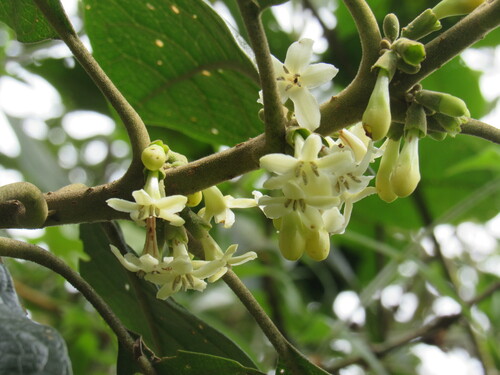
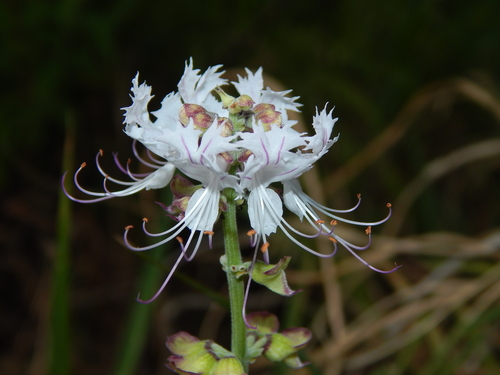
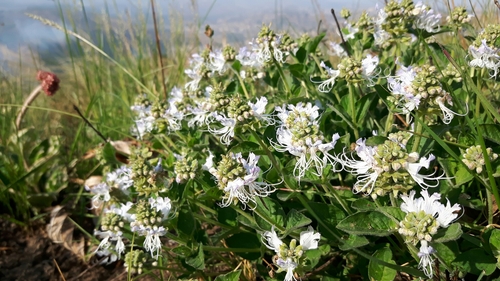
Ocimum obovatum
E. Mey ex Benth.
iNaturalist · cc-by-nc
(c) Moira FitzPatrick, some rights reserved (CC BY-NC), uploaded by Moira FitzPatrick
(c) Moira FitzPatrick, some rights reserved (CC BY-NC), uploaded by Moira FitzPatrick

iNaturalist · cc-by-nc
(c) Kate Braun, some rights reserved (CC BY-NC), uploaded by Kate Braun
(c) Kate Braun, some rights reserved (CC BY-NC), uploaded by Kate Braun
iNaturalist · cc-by-nc
(c) Craig Peter, some rights reserved (CC BY-NC), uploaded by Craig Peter
(c) Craig Peter, some rights reserved (CC BY-NC), uploaded by Craig Peter
What to Eat
Edible parts: Leaves - tea, Leaves - spice
The leaves are used as a tea or dried as a spice.
Where to Find It
It is a tropical plant.
Africa, East Africa, Ethiopia,
Countries: Angola, Burkina Faso, Burundi, Benin, Botswana, Congo (DRC), Central African Republic, Congo (Republic), Cote d'Ivoire, Cameroon, Cape Verde, Djibouti, Algeria, Egypt, Eritrea, Ethiopia, Gabon, Ghana, Gambia, Guinea, Equatorial Guinea, Guinea-Bissau, Kenya, Comoros, Liberia, Lesotho, Libya, Morocco, Madagascar, Mali, Mauritania, Mauritius, Malawi, Mozambique, Namibia, Niger, Nigeria, Rwanda, Seychelles, Sudan, Sierra Leone, Senegal, Somalia, South Sudan, Sao Tome & Principe, Eswatini, Chad, Togo, Tunisia, Tanzania, Uganda, South Africa, Zambia, Zimbabwe
How to Identify
A tropical herb in the mint family (Lamiaceae) with aromatic leaves.
Names & Synonyms
Tosin
Becium obovatum (E. Mey. ex Benth.) N. E. Br.
References (2)
- Bussman, R. W., et al, 2011, Plant Use in Odo-Bulu and Demaro, Bale region, Ethiopia. Journal of Ethnobiology and Ethnomedicine. 2011, 7:28 (As Becium cf. obovatum)
- Luizza, M. W., et al., 2013, Local Knowledge of Plants and their uses among Women in the Bale Mountains, Ethiopia. Ethnobotany Research & Applications 11:315-339