Combretum psidioides subsp. dinteri
Welw., (Schinz) Exell
Dinter’s combretum, Silver bush-willow
(c) Peter Erb, some rights reserved (CC BY-NC), uploaded by Peter Erb
(c) Peter Erb, some rights reserved (CC BY-NC)
What to Eat
Edible parts: Gum, Bark
The gum produced when trees are wounded is edible, and the bark is also edible.
Where to Find It
A tropical plant. They grow at low altitudes in dry areas.
Africa, Angola, Botswana, Central Africa, East Africa, Mozambique, Namibia, South Africa, Southern Africa, Zimbabwe,
How to Identify
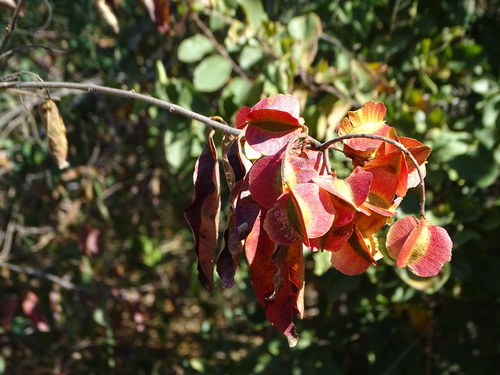
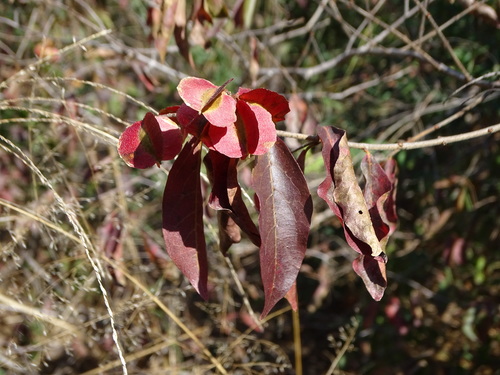
A small to medium sized tree. The crown is dense and silvery. The branches droop. The bark is rough and dark. The leaves are grey and velvety. They are 3.5-9 cm long by 2.5-5 cm wide. They are oblong and on short furry stalks. The lower surface of the leaf is densely covered with hairs. The flowers are in spikes 10 cm long. They are greenish-yellow. The fruit has wings. The fruit is 3 cm across. It is a wine red colour.
Notes
There are about 255 Combretum species.
Names & Synonyms
Iwupu, Peeling twig combretum
References (4)
- Mannheimer, C. A. & Curtis. B.A. (eds), 2009, Le Roux and Muller's Field Guide to the Trees and Shrubs of Namibia. Windhoek: Macmillan Education Namibia. p 364
- Palgrave, K.C., 1996, Trees of Southern Africa. Struik Publishers. p 674
- Palmer, E and Pitman, N., 1972, Trees of Southern Africa. Vol. 3. A.A. Balkema, Cape Town p 1651
- Peters, C. R., O'Brien, E. M., and Drummond, R.B., 1992, Edible Wild plants of Sub-saharan Africa. Kew. p 86


