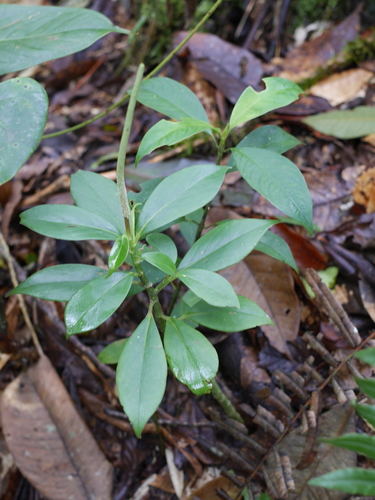
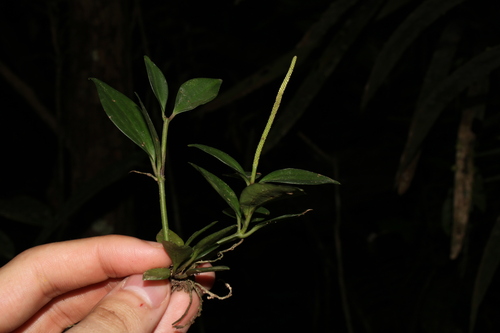
Piper pedicellosum
Wall.
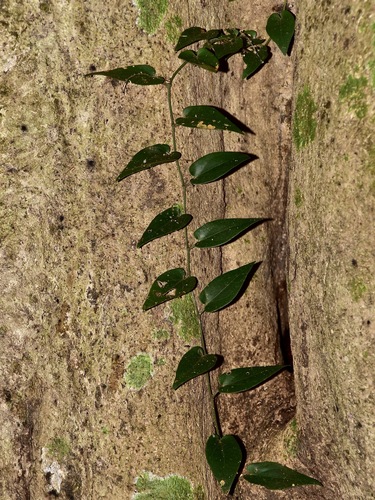
(c) Nasser Halaweh, some rights reserved (CC BY)
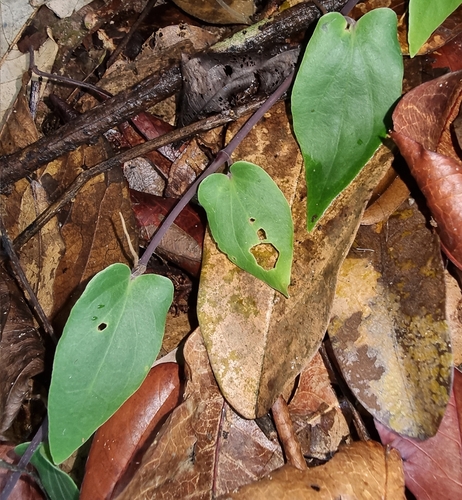
(c) Gavin, some rights reserved (CC BY-NC)
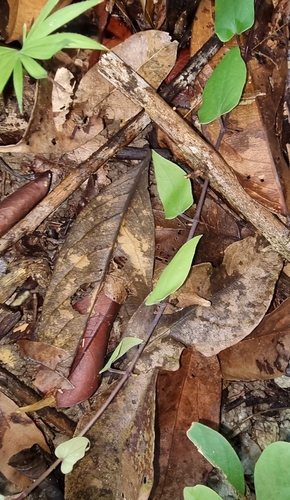
(c) Gavin, some rights reserved (CC BY-NC)
What to Eat
Edible parts: Leaves
The leaves are edible.
Where to Find It
It is a subtropical plant.
Asia, Himalayas, India, Northeastern India,
How to Identify
A subtropical climber or shrub in the Piperaceae family with edible leaves.
How to Grow
Very closely related to P. Cubeba and P. Ribesioides.
Medicinal Uses
This species is related to P. Cubeba and is said to have similar uses. These uses are:- Cubeb is a bitter, antiseptic, stimulant herb with a pungent, turpentine-allspice aroma. Both the fruits and essential oil are used and have diuretic and expectorant effects whilst also improving digestion. The fruits contain a number of medically active compounds including an essential oil; a bitter principle (cubebin); an alkaloid (piperidine); resin and a fixed oil. The immature, dried fruits are used in the treatment of coughs, bronchitis, sinusitis, throat and genito-urinary infections, poor digestion and amoebic dysentery. Cubeb oil is antiseptic, carminative, diuretic and a stimulating expectorant. It is used as an ingredient of some throat lozenges.
Notes
An unresolved name in The Plant List.
Names & Synonyms
Rer
References (1)
- Murtem, G. & Chaudhrey, P., 2016, An ethnobotanical note on wild edible plants of Upper Eastern Himalaya, India. Brazilian Journal of Biological Sciences, 2016, v. 3, no. 5, p. 63-81