Oncoba dentata
Oliv.
iNaturalist · cc-by-nc
(c) Carel Jongkind, some rights reserved (CC BY-NC)
(c) Carel Jongkind, some rights reserved (CC BY-NC)
iNaturalist · cc-by-nc
(c) Carel Jongkind, some rights reserved (CC BY-NC)
(c) Carel Jongkind, some rights reserved (CC BY-NC)

iNaturalist · cc-by-nc
(c) Bart Wursten, some rights reserved (CC BY-NC)
(c) Bart Wursten, some rights reserved (CC BY-NC)
What to Eat
Edible parts: Salt
Where to Find It
It is a tropical plant.
Africa, Angola, Cameroon, Central Africa, Congo DR, Guinea, Guinée, Sudan,
Countries: Angola, Burkina Faso, Burundi, Benin, Botswana, Congo (DRC), Central African Republic, Congo (Republic), Cote d'Ivoire, Cameroon, Cape Verde, Djibouti, Algeria, Egypt, Eritrea, Ethiopia, Gabon, Ghana, Gambia, Guinea, Equatorial Guinea, Guinea-Bissau, Kenya, Comoros, Liberia, Lesotho, Libya, Morocco, Madagascar, Mali, Mauritania, Mauritius, Malawi, Mozambique, Namibia, Niger, Nigeria, Rwanda, Seychelles, Sudan, Sierra Leone, Senegal, Somalia, South Sudan, Sao Tome & Principe, Eswatini, Chad, Togo, Tunisia, Tanzania, Uganda, South Africa, Zambia, Zimbabwe
How to Identify
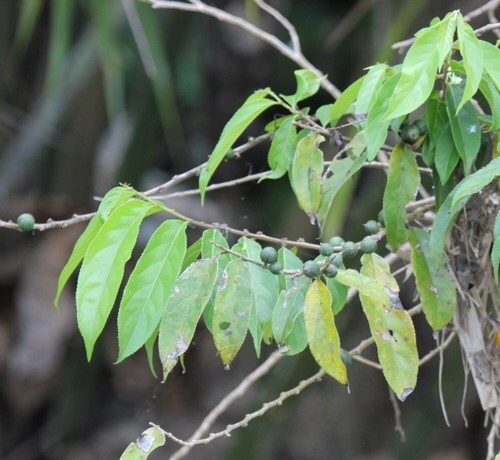
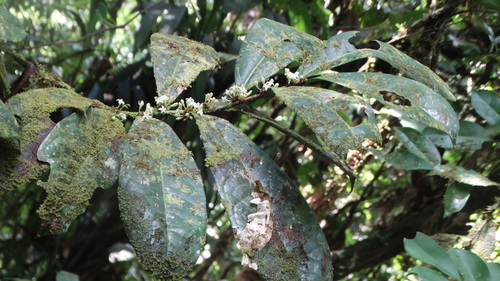
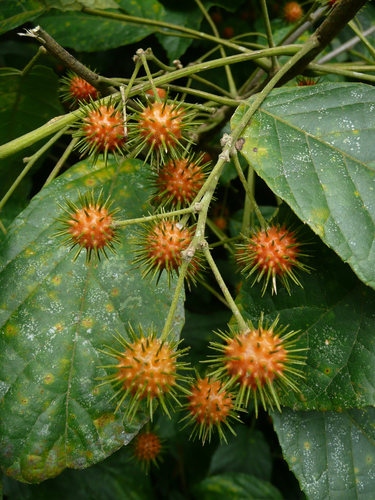
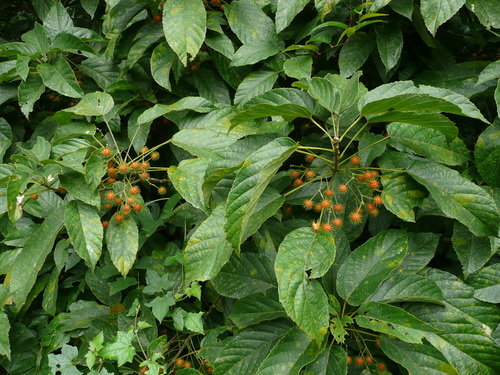
A shrub or small tree. It grows 6-10 m tall. The leaves are round and have coarse teeth. The leaves are 8-28 cm long by 4-14 cm wide. The leaf stalk is 4-18 cm long. The flowers are white and have scent. They are in groups 7-10 cm long. The fruit capsule is orange when ripe and 2-3 cm across. It has a red layer around a few shiny black seeds.
Names & Synonyms
Dikaka dia ndianga, Lompondju, Mbamba, Nkaka kisani, Pangia ya nsania
Lindackeria dentata (Oliv.) Gilg
References (1)
- Latham, P & Mbuta, A., 2017, Useful Plants of Central Province, Democratic Republic of Congo. Volume 2. Salvation Army p 71