Chusquea quila
Kunth
Quila
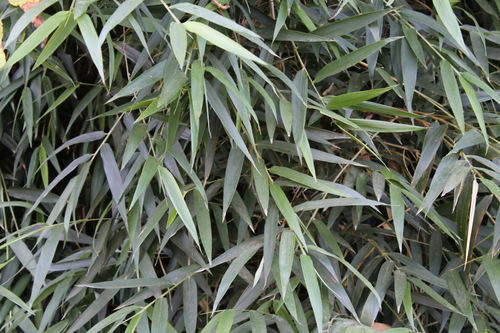
(c) Patricio Novoa Quezada, some rights reserved (CC BY-NC)
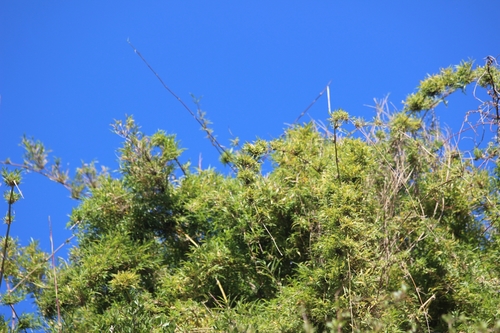
(c) Montserrat Fica Henriquez, some rights reserved (CC BY-NC), uploaded by Montserrat Fica Henriquez

(c) Tony Rebelo, some rights reserved (CC BY-SA), uploaded by Tony Rebelo
What to Eat
Edible parts: Shoots, Seeds
Young shoots are eaten cooked.
Where to Find It
It is a temperate plant.
Chile, South America,
How to Identify
An evergreen bamboo growing to 5 m tall with a spread of 2.5 m. Hardy to UK zone 7, it grows on sandy, loamy, and clay soils, tolerates semi-shade, and adapts to both moist and drought conditions across a wide pH range.
How to Grow
Plants can be grown from seeds.
Propagation: Surface sow seed as soon as it is ripe in a greenhouse at around 20°C, keeping the compost consistently moist. Germination usually occurs fairly quickly with good-quality seed, though it can take 3–6 months. Grow on in a lightly shaded spot in the greenhouse until large enough to plant out. Seed is rarely available. Division in spring as new growth begins is very difficult; take divisions with at least four canes, disturbing the main plant's roots as little as possible. Grow divisions in light shade in a greenhouse in pots of high-fertility sandy medium and mist the foliage regularly until established. Plant out when a good root system has developed, which may take a year or more. Basal cane cuttings can also be used.
Medicinal Uses
None known
Other Uses
The canes are used to make musical instruments, plain furniture, and fencing.
Wikipedia
Source ↗Chusquea quila, or Spanish: quila, is a perennial bamboo that grows in the humid temperate forests of Chile and Argentina. In contrast to most bamboos, it grows as a dense, climbing or decumbent shrub. Its aerial culms are solid, unlike most bamboos, which have hollow culms. Chusquea quila may form pure stands called quilantales occupying all the understory of a forest. Chusquea quila and whole quilantales flower every 10 to 30 years (or 18 to 20 years in some accounts). The seeding that follow the flowering has been associated with mouse vermin. Flour can be prepared from its seeds and its shoots are edible. Chusquea quila species have been historically harvested for seed by indigenous peoples. Mapuche and Pehuenche people are reported to have made flour of the seeds.
Names & Synonyms
References (3)
- Cordero, S. E., Abello, L. A., & Galvez, F. L., 2017, Plantas silvestres comestibles y medicinales de Chile y otras partes del mundo. CORMA p 47
- Leon-Lobos, P., et al, 2022, Patterns of Traditional and Modern Uses of Wild Edible Native Plants of Chile: Challenges and Future Perspectives. Plants (Basel) v 11 (6) Table S1
- Rapoport, E. H. & Ladio, A. H., 1999, Plantas comestibles. Bosque Volume 20 No. 2. ISSN 0314-8799


