Coprinopsis cinerea
(chaeff.) Redhead, Vilgalys & Moncalvo
PsathyrellaceaeMushrooms
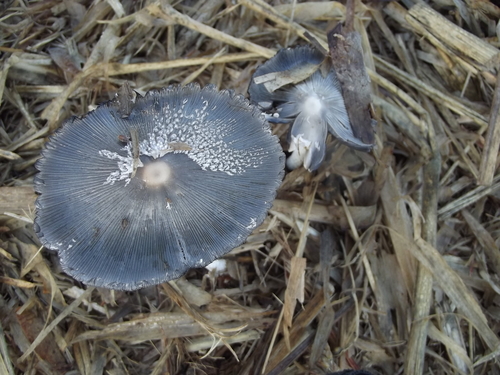
iNaturalist · cc-by-nc
(c) J. Fernando Pío León, some rights reserved (CC BY-NC), uploaded by J. Fernando Pío León
(c) J. Fernando Pío León, some rights reserved (CC BY-NC), uploaded by J. Fernando Pío León

iNaturalist · cc-by-nc-sa
(c) Manuel de Jesús Hernández Ancheita, some rights reserved (CC BY-NC-SA), uploaded by Manuel de Jesús Hernández Ancheita
(c) Manuel de Jesús Hernández Ancheita, some rights reserved (CC BY-NC-SA), uploaded by Manuel de Jesús Hernández Ancheita

iNaturalist · cc-by-sa
(c) Anna Baykalova, some rights reserved (CC BY-SA)
(c) Anna Baykalova, some rights reserved (CC BY-SA)
What to Eat
Edible parts: Mushroom, Fungus
The fruiting body (mushroom) is edible.
Where to Find It
It is a tropical plant.
Asia, India,
Countries: United Arab Emirates, Afghanistan, Armenia, Azerbaijan, Bangladesh, Bahrain, Brunei, Bhutan, China, Georgia, Indonesia, Israel, India, Iraq, Iran, Jordan, Japan, Kyrgyzstan, Cambodia, North Korea, South Korea, Kuwait, Kazakhstan, Laos, Lebanon, Sri Lanka, Myanmar, Mongolia, Maldives, Malaysia, Nepal, Oman, Philippines, Pakistan, Qatar, Saudi Arabia, Singapore, Syria, Thailand, Tajikistan, Timor-Leste, Turkmenistan, Turkey, Taiwan, Uzbekistan, Vietnam, Yemen
How to Identify
A mushroom in the family Psathyrellaceae found in tropical regions.
Wikipedia
Source ↗Coprinopsis cinerea is a species of mushroom in the family Psathyrellaceae. Commonly known as the gray shag, it is edible, but must be used promptly after collecting. Coprinopsis cinerea is an important model organism for studying fungal sex and mating types, mushroom development, and the evolution of multicellularity of fungi. The genome sequence was published in 2010. It is considered to be particularly suited organism to study meiosis, due to its synchronous meiotic development and prolonged prophase.
Names & Synonyms
Agaricus cinereus Schaeff.Agaricus radians BatschCoprinus cinereus (Schaeff.) Grayand others
References (1)
- Thatoi, H. & Singdevsachan, S. K., 2014, Diversity, nutritional composition and medicinal potential of Indian mushrooms: A review. African Journal of Biotechnology 13(4): 523-545

