Geranium rotundifolium
L.

(c) kevinhintsa, some rights reserved (CC BY-NC), uploaded by kevinhintsa
(c) Ron Vanderhoff, some rights reserved (CC BY-NC), uploaded by Ron Vanderhoff

(c) Henry Miller, some rights reserved (CC BY), uploaded by Henry Miller
What to Eat
Edible parts: Leaves
None known
Where to Find It
It is a temperate plant.
Australia, Caucasus, Central Asia, Georgia, Luxembourg, Slovenia, Tajikistan, Tasmania,
How to Identify
An annual reaching 0.4 m in height. Hardy to UK zone 7. Blooms June to July. Hermaphroditic, self-fertile flowers pollinated by insects. Suitable for light sandy, medium loamy, and heavy clay soils with mildly acidic to basic pH. Requires full sun and prefers moist soil.
How to Grow
We have very little information on this species and do not know if it will be hardy in Britain, though judging by its native range it should succeed outdoors in many parts of this country. The following notes are based on the general needs of the genus. Succeeds in any moderately fertile retentive soil in a sunny position. Tolerates a wide range of soil types. Members of this genus are rarely if ever troubled by browsing deer or rabbits.
Propagation: Sow seed in spring in a cold frame. Once seedlings are large enough to handle, prick them out into individual pots and plant out during summer. Divide clumps in spring or autumn — larger clumps can go directly into permanent positions, but smaller ones are best potted up and grown on in a cold frame until well rooted, then planted out in spring.
Medicinal Uses
The plant is used medicinally as both an astringent and a diuretic.
Other Uses
None known
Wikipedia
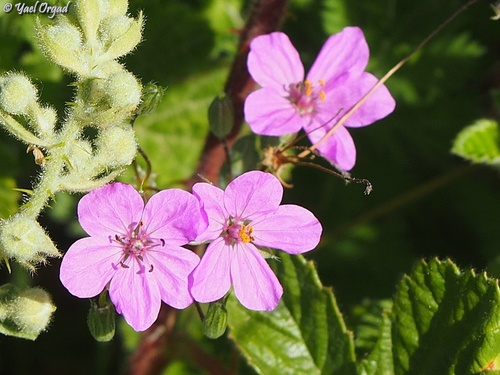
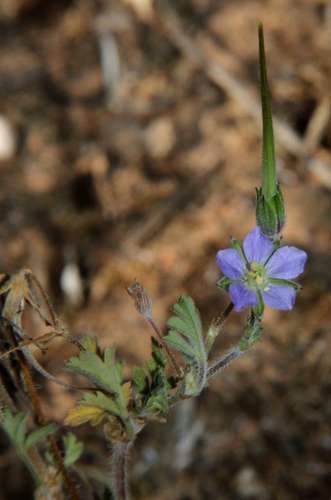
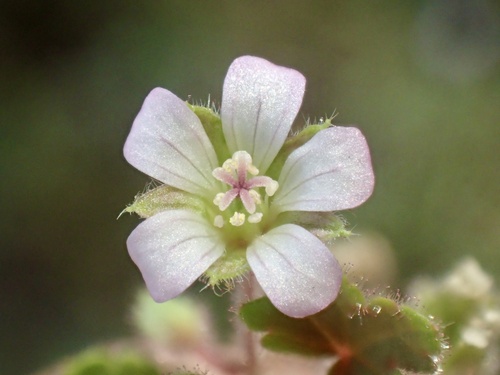
Source ↗Geranium rotundifolium (round-leaved crane's-bill), is a species of annual herb in the family Geraniaceae. It is native in temperate climates across much of Europe, northern Africa, and southwestern Asia; its distribution is spreading north, in response to global warming. The species favours dry, sandy or stony habitat, including old walls, rail ballast, and building rubble, including in urban areas. The basal leaves are simple, 3–6 cm across, broad rounded kidney-shaped, with a shallowly lobed margin; leaves higher up the stem are smaller and more deeply lobed. The flowering stems can grow to 20 cm tall; both the stems and leaves are hairy with glandular hairs. The flowers are small, 10–16 mm diameter, pink, with five petals with a rounded to shallowly two-lobed apex (unlike similar related species, which have a more deeply notched petal apex). The flowers are visited by sweat bees, Small Carpenter Bees, Myopa, and cabbage butterfly.
Names & Synonyms
Okrobecheda, Okroglolistna krvomočnica, Zghvis moloka
References (1)
- Luczaj, L. et al, 2017, Comfrey and Buttercup Eaters: Wild Vegetables of the Imereti Region in Western Georgia, Caucasus. Economic Botany, 71(2), 2017, pp. 188–193