Panicum mindanaense
Merr.
PoaceaeSeeds/Nuts
iNaturalist · cc-by-nc-sa
(c) Reiner Richter, some rights reserved (CC BY-NC-SA), uploaded by Reiner Richter
(c) Reiner Richter, some rights reserved (CC BY-NC-SA), uploaded by Reiner Richter
iNaturalist · cc-by-nc-sa
(c) Reiner Richter, some rights reserved (CC BY-NC-SA), uploaded by Reiner Richter
(c) Reiner Richter, some rights reserved (CC BY-NC-SA), uploaded by Reiner Richter
What to Eat
Edible parts: Seeds
The seeds are eaten.
Where to Find It
It is a tropical plant. It grows near sea level ad up to 170 m above sea level.
Asia, Australia, Indochina, Papua New Guinea, PNG, Philippines, SE Asia,
Countries: United Arab Emirates, Afghanistan, Armenia, Australia, Azerbaijan, Bangladesh, Bahrain, Brunei, Bhutan, China, Georgia, Indonesia, Israel, India, Iraq, Iran, Jordan, Japan, Kyrgyzstan, Cambodia, North Korea, South Korea, Kuwait, Kazakhstan, Laos, Lebanon, Sri Lanka, Myanmar, Mongolia, Maldives, Malaysia, Nepal, Oman, Papua New Guinea, Philippines, Pakistan, Qatar, Saudi Arabia, Singapore, Syria, Thailand, Tajikistan, Timor-Leste, Turkmenistan, Turkey, Taiwan, Uzbekistan, Vietnam, Yemen
How to Identify
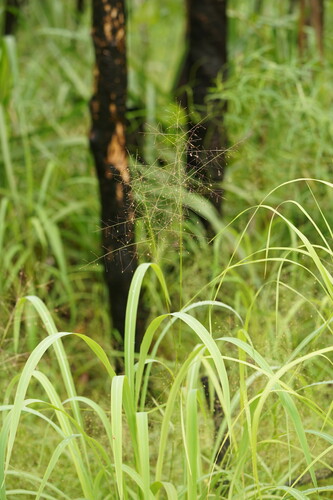
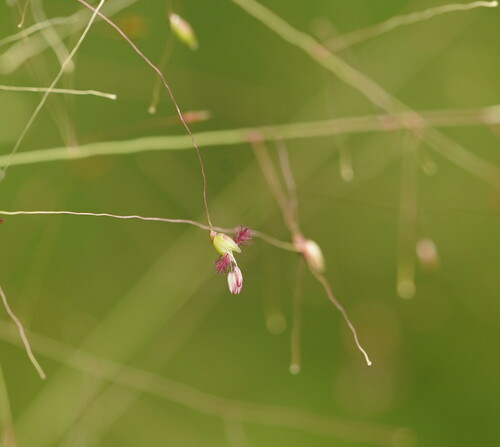
A grass. It forms tufts. It grows 20-80 cm tall. There are 3-6 nodes. The stems have a purple tinge. The leaves are rounded at the base. The leaves are 3-18 cm long by 1.5-4.5 mm wide. The flowers are in an open group.
Names & Synonyms
Milalba
Panicum delicatum Hughes
References (1)
- Crawford, I. M., 1982, Traditional Aboriginal Plant Resources in the Kalumburu Area: Aspects in Ethno-economics. Records of the Western Australian Museum Supplement No. 15 (As Panicum delicatum)


