Chassalia curviflora
(Wall.) Thwaites
RubiaceaeLeaves

iNaturalist · cc-by-nc
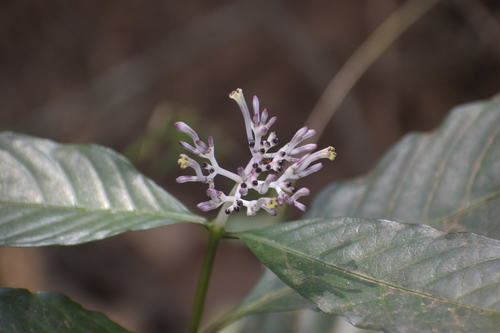
(c) Vatcharavee Sriprasertsil, some rights reserved (CC BY-NC), uploaded by Vatcharavee Sriprasertsil
(c) Vatcharavee Sriprasertsil, some rights reserved (CC BY-NC), uploaded by Vatcharavee Sriprasertsil
iNaturalist · cc-by-nc
(c) Ashwit Shetty, some rights reserved (CC BY-NC), uploaded by Ashwit Shetty
(c) Ashwit Shetty, some rights reserved (CC BY-NC), uploaded by Ashwit Shetty

iNaturalist · cc-by-nc-sa
(c) Reuben C. J. Lim, some rights reserved (CC BY-NC-SA)
(c) Reuben C. J. Lim, some rights reserved (CC BY-NC-SA)
What to Eat
Edible parts: Leaves
The leaves are eaten.
Where to Find It
It is a subtropical plant. In Sikkim it grows between 600-1,800 m above sea level.
Andamans, Asia, India, Northeastern India, Sikkim,
Countries: United Arab Emirates, Afghanistan, Armenia, Azerbaijan, Bangladesh, Bahrain, Brunei, Bhutan, China, Georgia, Indonesia, Israel, India, Iraq, Iran, Jordan, Japan, Kyrgyzstan, Cambodia, North Korea, South Korea, Kuwait, Kazakhstan, Laos, Lebanon, Sri Lanka, Myanmar, Mongolia, Maldives, Malaysia, Nepal, Oman, Philippines, Pakistan, Qatar, Saudi Arabia, Singapore, Syria, Thailand, Tajikistan, Timor-Leste, Turkmenistan, Turkey, Taiwan, Uzbekistan, Vietnam, Yemen
How to Identify
A shrub. It grows 1.5 m tall. The leaves are 22 cm long by 8 cm wide. They are broadly sword shaped. The taper to a short tip. The flowers are 15 mm long and have s short stalk. The fruit are round and 6 mm across. There are 2 seeds.
Wikipedia
Source ↗Chassalia curviflora is a species of flowering plant in the family Rubiaceae. Its common names include curved flower woody chassalia and wan guan hua. It is native to South and East Asia (from India to China and Indonesia).
Names & Synonyms
Yamari
Chassalia curviflora var. curvifloraChassalia lurida (Blume) Miq.Chassalia lurida var. angustifolia Miq.Chassalia lurida var. megacoma Miq.Chassalia sanguiana Miq.Chassalia tetrandra (Blume) Miq.Psychotria curviflora Wall.Psychotria lurida BlumePsychotria tetrandra BlumeUragoga curviflora (Wall.) KuntzeZwaardekronia lurida (Blume) Korth.
References (2)
- Savita, et al, 2006, Studies on wild edible plants of ethnic people in east Sikkim. Asian J. of Bio Sci. (2006) Vol. 1 No. 2 : 117-125
- Wild edible plants of Himachal Pradesh


