Alsophila cuspidata
(Kunze) D. S. Conant.
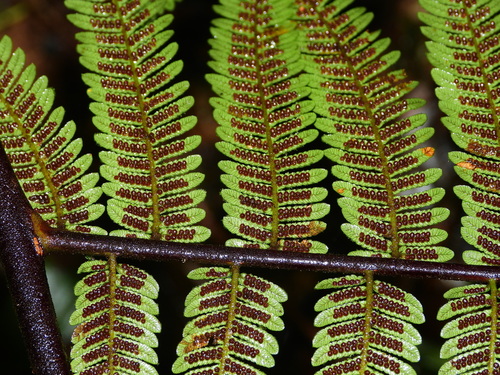
(c) Sébastien SANT, some rights reserved (CC BY-NC), uploaded by Sébastien SANT
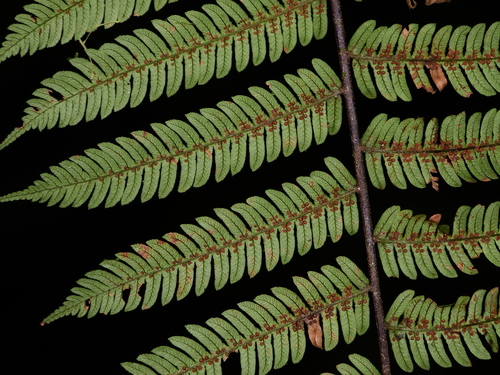
(c) Sébastien SANT, some rights reserved (CC BY-NC), uploaded by Sébastien SANT
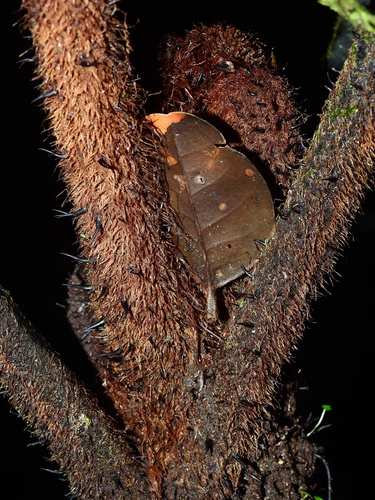
(c) Sébastien SANT, some rights reserved (CC BY-NC), uploaded by Sébastien SANT
What to Eat
Edible parts: Rhizomes, Leaves
The rhizomes are grated and boiled. Both rhizomes and leaves are edible portions.
Where to Find It
It is a tropical plant.
Bolivia, Brazil, Colombia, Costa Rica, Ecuador, Nicaragua, Panama, Paraguay, Peru, South America,
How to Identify
A tropical tree fern in the Cyatheaceae family with edible rhizomes and leaves.
Wikipedia
Source ↗Alsophila cuspidata, synonym Cyathea cuspidata, is a widespread species of tree fern native to Central and South America, where it grows in tropical rain forest up to the montane zone, as well as in open sites, on riverbanks and cleared pastureland at an altitude of 0–800 m. Its natural distribution covers Mexico, Guatemala, Belize, Honduras, El Salvador, Nicaragua, Costa Rica, Panama, Colombia, Ecuador, Peru, Bolivia, Paraguay, the Amazon Basin, Brazil and French Guiana. This species often has multiple trunks, which may be 15 m tall and about 10 cm in diameter. They are covered in black spines and together form a medium-sized, feathery clump. Fronds are bipinnate and 2–3 m long. The rachis and stipe are brown to dark brown and are covered with scales. The scales are bicoloured, having a dark brown to blackish centre and a pale, whitish margin. Pinnule veins sometimes have small, brown, star-shaped scales. Sori are round and form on either side of the pinnule midvein. They are covered by globose indusia. In cultivation, A. cuspidata should be provided with high humidity and warm temperatures. It should not be exposed to frost.
Names & Synonyms
Aa pa'chi, Pesijeca
References (3)
- Barfod, A. S. & Kvist, L. P., 1996, Comparative Ethnobotanical Studies of the Amerindian Groups in Coastal Ecuador. The Danish Academy of Sciences and Letters. p 80 (As Nephelea cuspidata)
- Kew Plants of the World On line
- Torre, de la L., et al, 2008, Enciclopedia de las Plantas Útiles del Ecuador. Herbario QCA. Pontificia Universidad Católica del Ecuador. p 125


