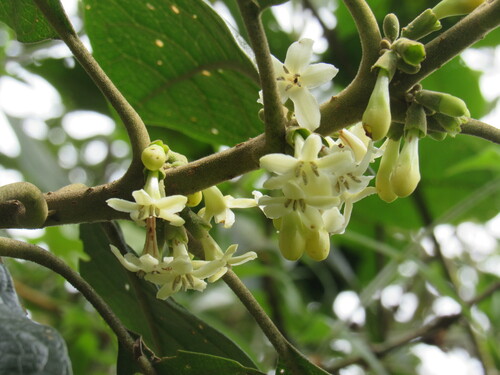
Hyptis capitata
Jacq.
Knobweed
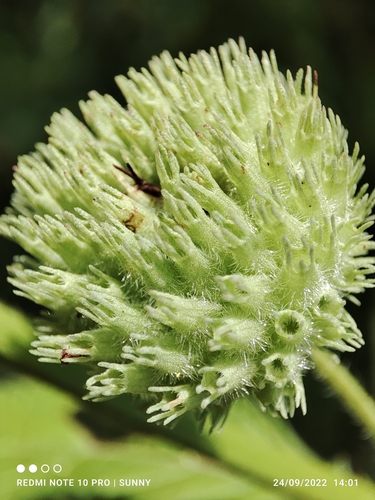
(c) SunGW, some rights reserved (CC BY-NC), uploaded by SunGW
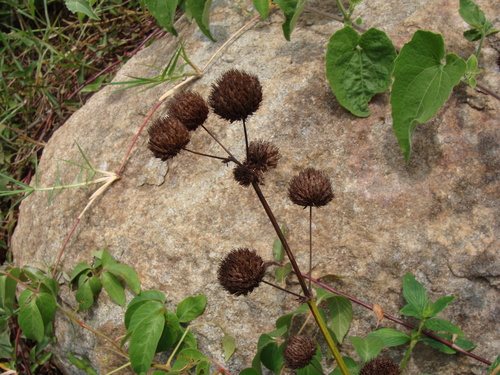
(c) Alexis López Hernández, some rights reserved (CC BY), uploaded by Alexis López Hernández
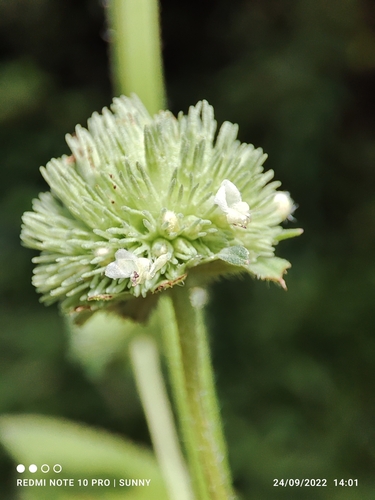
(c) SunGW, some rights reserved (CC BY-NC), uploaded by SunGW
What to Eat
Edible parts: Leaves - flavouring
The leaves are used as a flavoring and are traditionally boiled and mixed with sugar to make a drink.
Where to Find It
It is a tropical plant. It grows from sea level to 750 m above sea level.
Australia, Ecuador, South America,
How to Identify
A herb or shrub. It grows 1-2 m tall. The leaf bearing twigs are 4 angled. The leaves and twigs have a strong odour when crushed. The leaves are 6-14 cm long by 2-6 cm wide. The leaves are hairy and these are more obvious on the upper surface. The flowers are in dense round heads.
How to Grow
A plant of the humid tropics, The plant has spread widely as a weed and is reported to be invasive in many areas. It seeds prolifically each year, which ensures its survival. The seeds, however, are light-sensitive and germination requires exposure to light. On the other hand, exposure to far-red radiation, which is predominant where sunlight is filtered through a canopy of leaves, hinders germination. Thus, since the plant is often found along margins and tracks of rainforests, there will be a large quantity of ungerminated seeds present which provides a nucleus of infestation when these areas are cleared. The seed can be spread in several ways: the flower heads, containing seed, are spread by water; the seeds are also dispersed by animals, humans, vehicles (including slashers and machinery), and when attached to fur, clothing and mud.
Medicinal Uses
Traditionally used as a medicinal drink prepared by boiling the leaves with sugar.
Wikipedia
Source ↗Hyptis capitata, also known as false ironwort or knobweed, is a species of erect annual shrubs, of the plant family Lamiaceae. It is native to Florida, Mexico, Central America, the West Indies, and South America but naturalized in Australia, Southeast Asia, and some tropical islands. The plants grow up to a height of 1.5 meters. Crushed leaves are applied to cuts. It is considered a weed in many places.
Names & Synonyms
Albahaca de monte, Al jiel taeco, Biojo, Bola de gato, Caballo sisa, Calabos tape, Jelen te'pun, Mala racha, Mansaniya tape, Manzanilla, Mastranto, Nohabianyono, Nojabiam, Supay kiwa, Wa te'pun
References (2)
- Barfod, A. S. & Kvist, L. P., 1996, Comparative Ethnobotanical Studies of the Amerindian Groups in Coastal Ecuador. The Danish Academy of Sciences and Letters. p 82
- Torre, de la, L., et al, 2008, Enciclopedia de las Plantas Útiles del Ecuador. Herbario QCA. Pontificia Universidad Católica del Ecuador. p 386