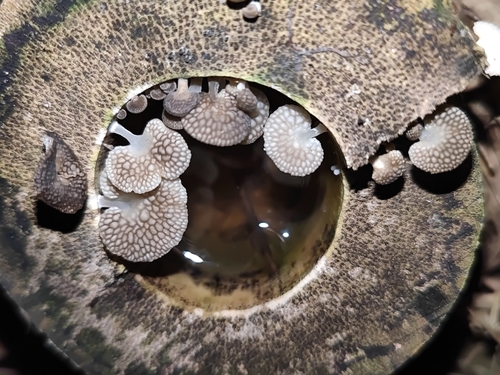
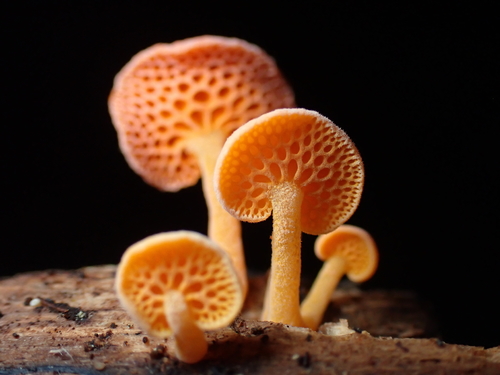
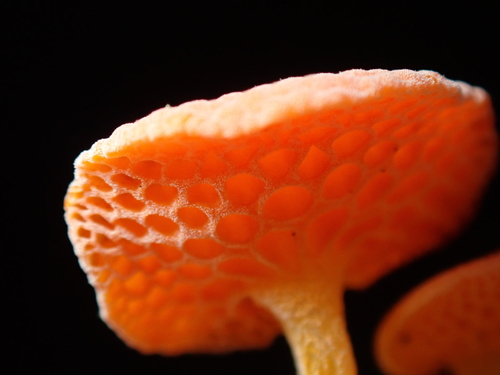
Favolaschia calocera
R. Heim.
MycenaceaeMushrooms
iNaturalist · cc-by-nc
(c) Amaya M., some rights reserved (CC BY-NC)
(c) Amaya M., some rights reserved (CC BY-NC)
iNaturalist · cc-by-nc
(c) Amaya M., some rights reserved (CC BY-NC)
(c) Amaya M., some rights reserved (CC BY-NC)

iNaturalist · cc-by-nc
(c) Alison Pollack, some rights reserved (CC BY-NC)
(c) Alison Pollack, some rights reserved (CC BY-NC)
What to Eat
Edible parts: Mushroom, Fungus
Where to Find It
It is a tropical plant.
Africa, Central Africa, Congo DR, East Africa, Tanzania, Zambia,
Countries: Angola, Burkina Faso, Burundi, Benin, Botswana, Congo (DRC), Central African Republic, Congo (Republic), Cote d'Ivoire, Cameroon, Cape Verde, Djibouti, Algeria, Egypt, Eritrea, Ethiopia, Gabon, Ghana, Gambia, Guinea, Equatorial Guinea, Guinea-Bissau, Kenya, Comoros, Liberia, Lesotho, Libya, Morocco, Madagascar, Mali, Mauritania, Mauritius, Malawi, Mozambique, Namibia, Niger, Nigeria, Rwanda, Seychelles, Sudan, Sierra Leone, Senegal, Somalia, South Sudan, Sao Tome & Principe, Eswatini, Chad, Togo, Tunisia, Tanzania, Uganda, South Africa, Zambia, Zimbabwe
How to Identify
A tropical mushroom in the family Mycenaceae.
Wikipedia
Source ↗Favolaschia calocera, commonly known as the orange pore fungus, is a species of fungus in the family Mycenaceae. Due to its form it is also known as orange pore conch or orange Ping-Pong bat. Throughout much of its expanded range F. calocera is now considered an invasive species. It colonizes ruderal sites along transport routes and can become dominant in habitats disturbed by human activity. Mycologists fear that it may be displacing native fungi species as it spreads through the paleotropics.
References (1)
- efta-online.org, Edible Fungi of Tropical Africa, Jardin botanique Meise