Terminalia argentea
Mart.
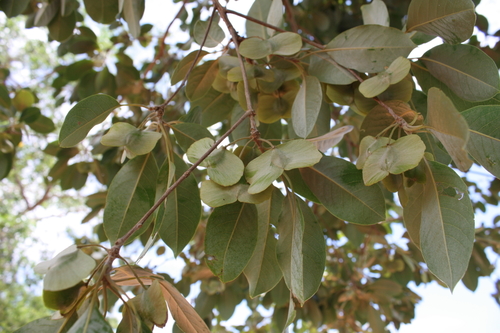
(c) Germaine Alexander Parada, some rights reserved (CC BY-NC), uploaded by Germaine Alexander Parada
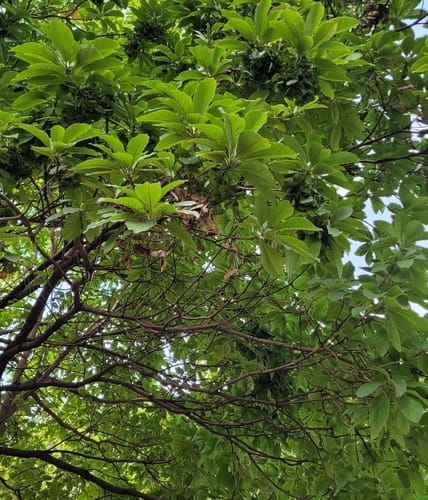
(c) Antonio Nonato, some rights reserved (CC BY-NC)
What to Eat
Edible parts: Nut?
Where to Find It
It is a tropical plant.
Bolivia, Brazil, South America,
How to Identify
A tree.
How to Grow
Grows best in a sunny position. Established plants are drought tolerant.
Propagation: Seed - best sown as soon as it is ripe in a partially shaded position in a nursery seedbed. A high germination rate can usually be expected, with the seed sprouting within 40 - 50 days. When the seedlings are 4 - 6cm tall, pot them up into individual containers. The seed has a viability in excess of 8 months in storage.
Medicinal Uses
A gum resin obtained from the bark is purgative.
Other Uses
The yellowish-brown heartwood is clearly demarcated from the sapwood. The texture is medium, the grain straight to interlocked, lustre medium. The wood is moderately heavy, hard, with good mechanical properties and moderate natural durability. It is used in general construction for purposes such as beams, scantlings, laths, floorboards, door and window frames etc. We do not have any more specific information on the wood from this species. However, all the Terminalia species from the tropical Americas are said to have similar woods, the following is a general description of that wood:- The heartwood is a light yellow to yellow brown, sometimes with reddish veins; it is clearly demarcated from the 3 - 8cm wide band of sapwood. The texture is medium; the grain is straight. The wood is heavy to very heavy; hard to very hard; elastic; moderately durable, being resistant to dry wood borers and moderately resistant to fungi and termites. It seasons slowly with a high risk of checking and distortion; once dry it is moderately stable to stable in service. It has a fairly high blunting effect, stellite-tipped and tungsten carbide tools are recommended; nailing and screwing are good if the holes are pre-bored; gluing is poor. A good quality wood, it is used for high quality furniture, cabinet making, arched goods, turnery, industrial flooring, ship building, joinery, tool handles, moulding, veneer etc. A pioneer species within its native range, it can be used in reforestation schemes where it can be successful in poor and dry soils.
Names & Synonyms
Capitao
References (1)
- Bortolotto, I. M., et al, 2018, Lista preliminar das plantas alimenticias nativas de Mato Grosso do Sul, Brasil. Iheringia, Serie Botanica, Porto Alegre, 73 (supl.):101-116


