Machilus thunbergii
Siebold & Zucc.
LauraceaeBark/Sap
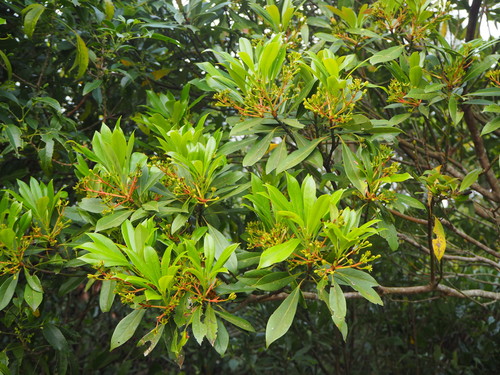
iNaturalist · cc0
no rights reserved, uploaded by 葉子
no rights reserved, uploaded by 葉子
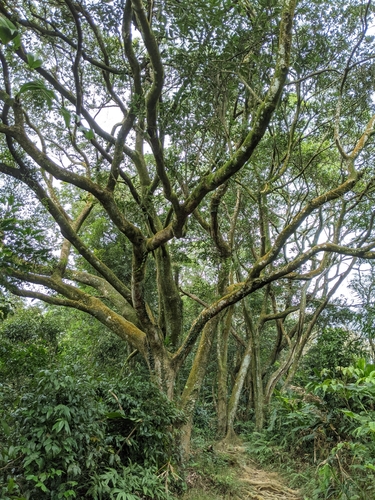
iNaturalist · cc-by-nc
(c) 傻子, some rights reserved (CC BY-NC), uploaded by 傻子
(c) 傻子, some rights reserved (CC BY-NC), uploaded by 傻子
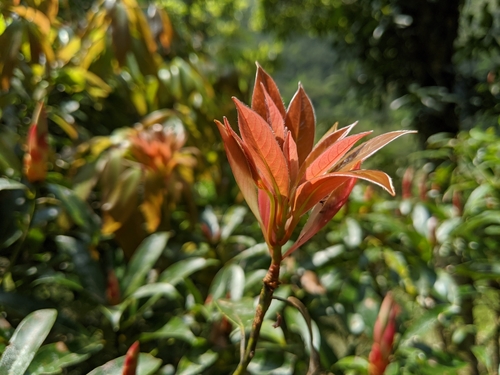
iNaturalist · cc-by-nc
(c) 傻子, some rights reserved (CC BY-NC), uploaded by 傻子
(c) 傻子, some rights reserved (CC BY-NC), uploaded by 傻子
What to Eat
Edible parts: Bark
Where to Find It
It is a temperate plant.
Asia, Korea,
Countries: United Arab Emirates, Afghanistan, Armenia, Azerbaijan, Bangladesh, Bahrain, Brunei, Bhutan, China, Georgia, Indonesia, Israel, India, Iraq, Iran, Jordan, Japan, Kyrgyzstan, Cambodia, North Korea, South Korea, Kuwait, Kazakhstan, Laos, Lebanon, Sri Lanka, Myanmar, Mongolia, Maldives, Malaysia, Nepal, Oman, Philippines, Pakistan, Qatar, Saudi Arabia, Singapore, Syria, Thailand, Tajikistan, Timor-Leste, Turkmenistan, Turkey, Taiwan, Uzbekistan, Vietnam, Yemen
How to Identify
A tree.
Wikipedia
Source ↗Machilus thunbergii (syn. Persea thunbergii), the Japanese bay tree, red machilus, or tabunoki, is a widespread species of flowering plant in the family Lauraceae. It is native to Vietnam, Taiwan, southeast and north-central China, the Korean Peninsula, and Japan. A sturdy evergreen tree, usually 10–15 m (30–50 ft) tall, and reaching 20 m (70 ft), it is used for timber, and as a street tree. Its bark is the source of makko, a powder used to make a mosquito‑repelling incense. It prefers coastal areas, and can handle saline soil.
Names & Synonyms
Hubaknamu
Machilus arisanensis (Hayata) HayataMachilus kwashotensis Hayatal
Machilus nanshoensis Kaneh.
Persea arisanensis (Hayata) Kosterm.and others
References (2)
- Ong, H. G., et al, 2015, Ethnobotany of the wild edible plants gathered in Ulleung Island, South Korea. Genet Resourc Crop Evol. Springer
- World Checklist of Useful Plant Species 2020. Royal Botanic Gardens, Kew


