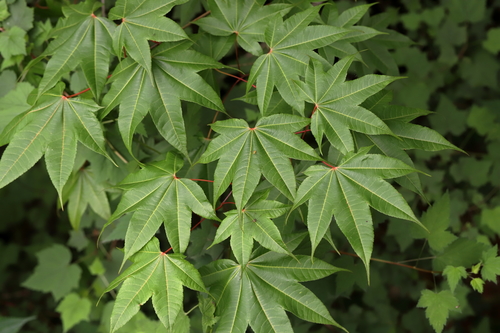
Melicoccus oliviformis
Kunth
Olive shaped honey berry, Yellow genip

(c) Tatiana Velasco, some rights reserved (CC BY-NC), uploaded by Tatiana Velasco
(c) Alejandra Flores, some rights reserved (CC BY-NC-SA)
(c) Alejandra Flores, some rights reserved (CC BY-NC-SA)
What to Eat
Edible parts: Fruit, Seed
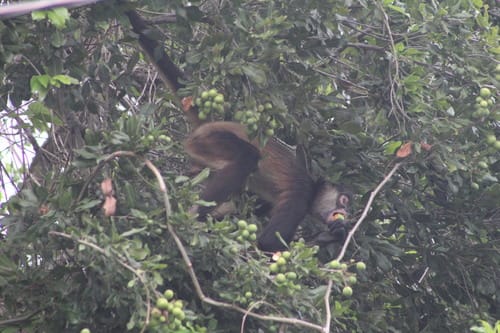
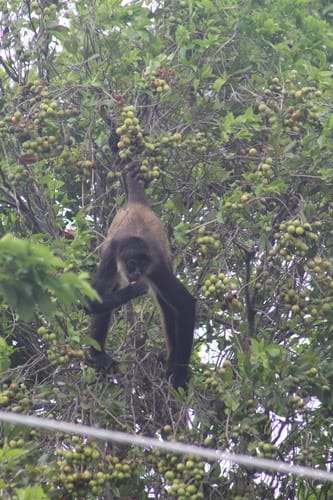
Fruit - eaten raw or used for jellies. A succulent, sweetly-acidulous pulp. The orange-red fruit pulp is somewhat acid but with an agreeable flavour. The yellowy-green, ellipsoid drupe is borne in clusters of 6 - 10; it can be 45mm long and 28mm wide, containing a single, large seed.
Where to Find It
It is a tropical plant. It grows from sea level to 150 m above sea level.
Belize, Brazil, Caribbean, Central America, Colombia, Costa Rica, Ecuador, El Salvador, Guatemala, Guyana, Honduras, Mexico, Nicaragua, Peru, South America, Trinidad and Tobago, Venezuela,
How to Identify
A tree. It grows 6-10 m tall. The crown is round. The trunk is 25-35 cm across. The leaves are alternate and compound. They have 2-3 pairs of leaflets. The flowers are small and white. They are in clusters near the ends of branches. The fruit are orange to red. They are in groups of 6-10 and 4.5 cm long by 3 cm wide. There is one large seed.
How to Grow
Plants are grown by fresh rip seed.
Propagation: Seed - best sown as soon as it is ripe in a partially shaded position in a nursery seedbed. A germination rate of less than 30% can be expected, with the seed sprouting within 40 - 50 days. Under humid conditions, fresh seeds germinate at 80 percent without pre-treatment. A heterogeneous sample of seeds germinated approximately 12 days after sowing. The seeds remain viable for approximately 9 months when stored under ambient conditions (24 to 30°c). Longer storage quickly diminishes seed viability.
Medicinal Uses
Seeds are roasted for consumption, suggesting traditional use beyond basic nutrition.
Other Uses
The wood is medium-textured, irregular-grained, moderately heavy, slightly susceptible to the attacks of wood-eating organisms. It can be used in general construction for purposes such as scantlings, beams and boards. The wood is used for fuel.
Other Information
It is cultivated.
Names & Synonyms
Cotiperi, Cotoperis, Cotoperiz, Cutupli, Guaya, Guaya paes, Guayo, Huaya, Huayum, Keneb, Kinep, Mamon cutuplis, Uayab, Uayum, Waya pais
References (6)
- Ferns, Useful Tropical Plants
- Grandtner, M. M. & Chevrette, J., 2013, Dictionary of Trees, Volume 2: South America: Nomenclature, Taxonomy and Ecology. Academic Press p 391
- Lopez-Diago, D. & Garcia, N., 2021, Wild edible fruits of Colombia. Biota ColomBiana 22 (2) p 50
- Roa, J. A. G. & Boada, D. S. G., 2018, Fundación para el Fortalecimiento de la Fruticultura y Plantas Alimenticias no Convencionales en Colombia.
- Segura, S., et al, 2018, The edible fruit species in Mexico. Genet Resour Crop Evol (2018) 65:1767–1793
- Wiersema, J. H. & Leon, B., 2013, World Economic Plants. A Standard Reference CRC Press. 2nd Ed. p 441