Ilex dumosa
Reissek
Bush holly
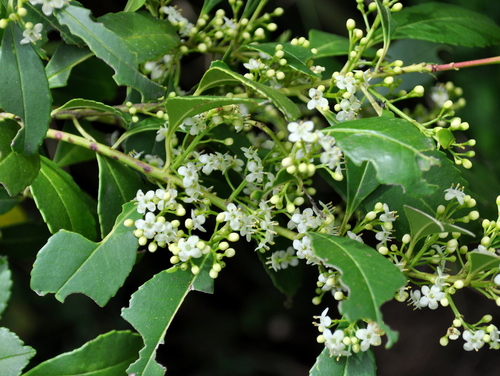
(c) vinicius_s_domingues, some rights reserved (CC BY)
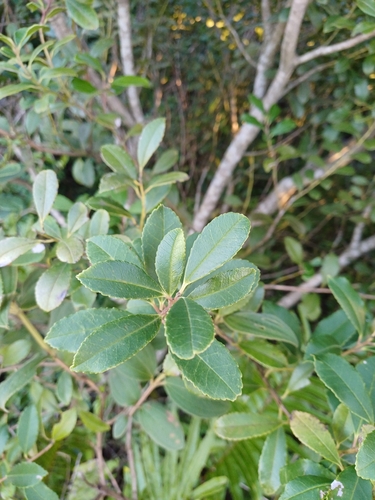
(c) JG, some rights reserved (CC BY)
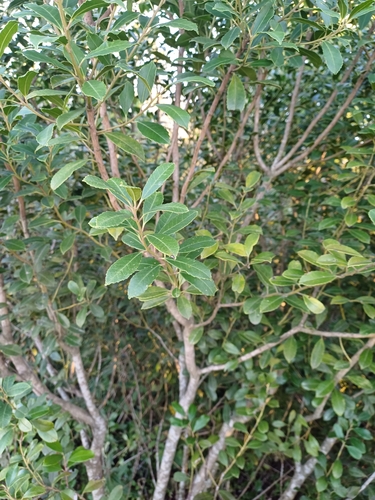
(c) JG, some rights reserved (CC BY)
What to Eat
Edible parts: Leaves - flavouring
The leaves are used as a flavouring.
Known Hazards
Where to Find It
It is a tropical plant.
Argentina, Brazil, Colombia, Paraguay, South America, Venezuela,
How to Identify
A small tropical tree in the holly family (Aquifoliaceae), grown for its aromatic leaves.
How to Grow
A plant of subtropical to tropical areas, being found at elevations from near sea level to over 1,000 metres. Grows best in a sunny position. Succeeds in most soil conditions. A dioecious species, both male and female forms need to be grown if fruit and seed are required.
Propagation: Seed - usually slow to germinate because they have a hard seedcoat. They can be stratified in damp soil, which will speed up the ingress of moisture and reduce germination time. Sow the seeds in light shade in a nursery seedbed. Germination rates are moderate.
Medicinal Uses
As with the related Ilex paraguariensis (Yerba Mate), regular consumption of a tea made from the leaves of this species has been shown to have a range of beneficial regulatory effects upon the body, particularly by acting as an antioxidant and by regulating blood-lipid levels, thus lowering high cholesterol levels and improving circulation to the heart.
Other Uses
The heartwood is white, not clearly demarcated from the sapwood. The wood is light, soft and easy to work with but with poor mechanical properties and very susceptible to rot. It is only used for making boxes. The wood is used as a fuel.
Names & Synonyms
Aperea ka'a, Caa-mini, Caa-xira, Caona, Erva-piriquita, Yerbe del cuis, Yerba senorita
References (1)
- Grandtner, M. M. & Chevrette, J., 2013, Dictionary of Trees, Volume 2: South America: Nomenclature, Taxonomy and Ecology. Academic Press p 315