Vantanea parviflora
Lam.
Small flower vantanea
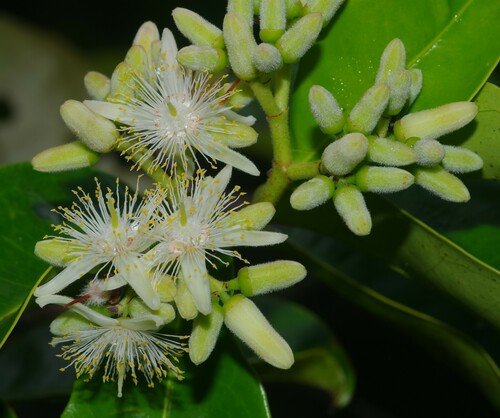
(c) Hervé GALLIFFET, some rights reserved (CC BY-NC), uploaded by Hervé GALLIFFET

(c) Pierrot F., some rights reserved (CC BY-NC)

(c) Pierrot F., some rights reserved (CC BY-NC)
What to Eat
Edible parts: Fruit
The fruit is edible.
Where to Find It
It is a tropical plant.
Amazon, Brazil, Colombia, French Guiana, Guianas, Peru, South America, Suriname, Venezuela,
How to Identify
A tropical tree in the Humiriaceae family found in tropical regions.
How to Grow
Succeeds in quite dense shade when young, becoming more tolerant and succeeding in full sun as it grows larger. Established plants are drought tolerant. Prefers a well-drained, clayey soil. A slow-growing tree, even when young.
Propagation: Seed - best sown as soon as it is ripe in a partially shaded position in individual containers. A low germination rate can usually be expected, with the seed sprouting within 28 - 42 days.
Other Uses
The wood is fine-textured, heavy, very hard to cut, with good mechanical properties and very durable. It can be used in general construction for purposes such as beams, scantlings, laths, floor boards, window and door jambs; also for cabinet making, door and window frames, cart bodies, applications in water and external uses in general.
Names & Synonyms
Bonga-bita, Conori, Ishpingo, Manchari, Manchari caspi, Sacha purutuanco rosado, Uchirana, Uchi-torrado
References (2)
- Grandtner, M. M. & Chevrette, J., 2013, Dictionary of Trees, Volume 2: South America: Nomenclature, Taxonomy and Ecology. Academic Press p 684
- Kew Plants of the World On line


