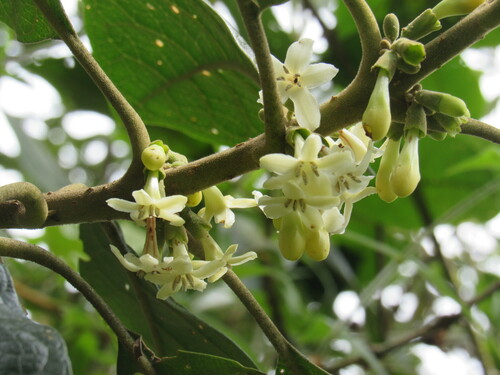
Salvia verticillata
L.

(c) tobi123, some rights reserved (CC BY-NC)
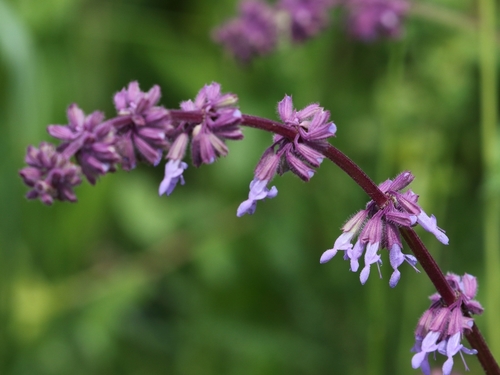
(c) Attila Steiner, some rights reserved (CC BY-NC), uploaded by Attila Steiner
What to Eat
Edible parts: Leaves - tea, Stems
The leaves are used for tea, and the stems are edible.
Where to Find It
It is a temperate plant.
Armenia, Caucasus, Europe, Georgia, Luxembourg, Slovenia, Turkey, Türkiye,
How to Identify
A temperate herb in the mint family (Lamiaceae) with leaves and stems used for culinary purposes.
Wikipedia
Source ↗Salvia verticillata, the lilac sage or whorled clary, is a herbaceous perennial native to a wide area ranging from central Europe to western Asia, and naturalized in northern Europe and North America. It was first described by Carl Linnaeus in 1753. Salvia verticillata has a leafy base of mid-green leaves covered with hairs, putting up leaf-covered stems that carry 3 feet (0.91 m) inflorescences. The tiny lavender flowers grow tightly packed in whorls, with tiny lime-green and purple calyces. The specific epithet verticillata refers to the whorls that grow in verticils. A cultivar introduced in the 1990s, 'Purple Rain', is much more showy and long-blooming, growing about 2 feet (0.61 m) tall.
Names & Synonyms
Dadirak, Djara, Eghespak, Vretenčasta kadulja
References (5)
- Bussman, R. W., et al, 2021, Unity in diversity—food plants and fungi of Sakartvelo (Republic of Georgia), Caucasus. Journal of Ethnobiology and Ethnomedicine (2021) 17:72 p 9
- Ertug, F, Yenen Bitkiler. Resimli Türkiye Florası -I- Flora of Turkey - Ethnobotany supplement
- http://www.botanic-gardens-ljubljana.com/en/plants
- Nanagulyan, S., et al, 2020, Wild plants and fungi sold in the markets of Yerevan (Armenia). Journal of Ethnobiology and Ethnomedicine 16:26
- Ozbucak, T. B. et al, 2006, The Contribution of Wild Edible Plants to Human Nutrition in the Black Sea Region of Turkey. Ethnobotanical Leaflets 10: 98-103