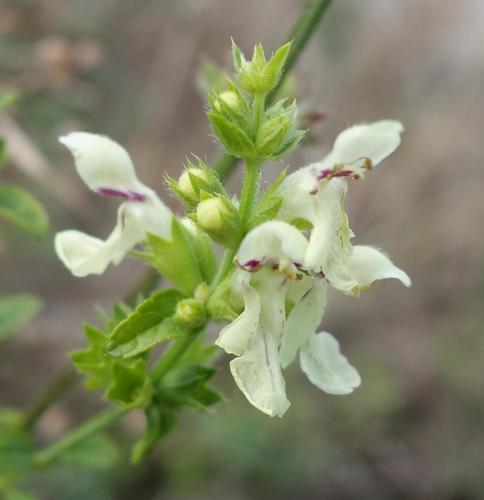
Stachys recta
L.
iNaturalist · cc-by
(c) agujaceratops, some rights reserved (CC BY), uploaded by agujaceratops
(c) agujaceratops, some rights reserved (CC BY), uploaded by agujaceratops

iNaturalist · cc-by
(c) Christian Oudot, some rights reserved (CC BY)
(c) Christian Oudot, some rights reserved (CC BY)

iNaturalist · cc-by-nc
(c) Piotr Kobierski, some rights reserved (CC BY-NC)
(c) Piotr Kobierski, some rights reserved (CC BY-NC)
What to Eat
Edible parts: Leaves - tea
The leaves and flowering tops are used to make drinks or tea.
Where to Find It
It is a temperate plant.
Asia, China, Europe, Luxembourg, Slovenia, Spain, Turkey, Türkiye, Tibet,
Countries: Andorra, United Arab Emirates, Afghanistan, Albania, Armenia, Austria, Azerbaijan, Bosnia & Herzegovina, Bangladesh, Belgium, Bulgaria, Bahrain, Brunei, Bhutan, Belarus, Switzerland, China, Cyprus, Czechia, Germany, Denmark, Estonia, Spain, Finland, France, United Kingdom, Georgia, Greece, Croatia, Hungary, Indonesia, Ireland, Israel, India, Iraq, Iran, Iceland, Italy, Jordan, Japan, Kyrgyzstan, Cambodia, North Korea, South Korea, Kuwait, Kazakhstan, Laos, Lebanon, Liechtenstein, Sri Lanka, Lithuania, Luxembourg, Latvia, Monaco, Moldova, Montenegro, North Macedonia, Myanmar, Mongolia, Malta, Maldives, Malaysia, Netherlands, Norway, Nepal, Oman, Philippines, Pakistan, Poland, Portugal, Qatar, Romania, Serbia, Russia, Saudi Arabia, Sweden, Singapore, Slovenia, Slovakia, San Marino, Syria, Thailand, Tajikistan, Timor-Leste, Turkmenistan, Turkey, Taiwan, Ukraine, Uzbekistan, Vietnam, Yemen
How to Identify
A temperate herb in the mint family (Lamiaceae).
Wikipedia
Source ↗Stachys recta, commonly known as stiff hedgenettle or perennial yellow-woundwort, is herbaceous perennial plant of the family Lamiaceae.
Names & Synonyms
Kara kurbagaoti, Pokončni čišljak
Stachys erecta K. Kochand several others
References (6)
- Boesi, A., 2014, Traditional knowledge of wild food plants in a few Tibetan communities. Journal of Ethnobiology and Ethnomedicine 10:75
- Bonet, M. A. & Valles, J., 2002, Use of non-crop food vascular plants in Montseny biosphere reserve (Catalonia, Iberian Peninsula). International Journal of Food Sciences and Nutrition (2002) 53, 225–248
- Dogan, Y., et al, 2004, The Use of Wild Edible Plants in Western and Central Anatolia (Turkey). Economic Botany 58(4) pp. 684-690
- Ertug, F, Yenen Bitkiler. Resimli Türkiye Florası -I- Flora of Turkey - Ethnobotany supplement
- http://www.botanic-gardens-ljubljana.com/en/plants
- Ozbucak, T. B. et al, 2006, The Contribution of Wild Edible Plants to Human Nutrition in the Black Sea Region of Turkey. Ethnobotanical Leaflets 10: 98-103 (As Stachys erecta L.)