Ochna obtusata
DC.
OchnaceaeRoots
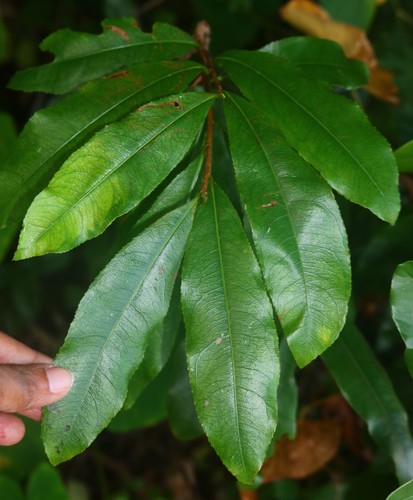
iNaturalist · cc-by-nc
(c) Shiwalee Samant, some rights reserved (CC BY-NC), uploaded by Shiwalee Samant
(c) Shiwalee Samant, some rights reserved (CC BY-NC), uploaded by Shiwalee Samant

iNaturalist · cc-by-nc
(c) maxncharlie, some rights reserved (CC BY-NC)
(c) maxncharlie, some rights reserved (CC BY-NC)

iNaturalist · cc-by
(c) Harsha Jayaramaiah, some rights reserved (CC BY)
(c) Harsha Jayaramaiah, some rights reserved (CC BY)
What to Eat
Edible parts: Root
Where to Find It
It is a tropical plant
Asia, India,
Countries: United Arab Emirates, Afghanistan, Armenia, Azerbaijan, Bangladesh, Bahrain, Brunei, Bhutan, China, Georgia, Indonesia, Israel, India, Iraq, Iran, Jordan, Japan, Kyrgyzstan, Cambodia, North Korea, South Korea, Kuwait, Kazakhstan, Laos, Lebanon, Sri Lanka, Myanmar, Mongolia, Maldives, Malaysia, Nepal, Oman, Philippines, Pakistan, Qatar, Saudi Arabia, Singapore, Syria, Thailand, Tajikistan, Timor-Leste, Turkmenistan, Turkey, Taiwan, Uzbekistan, Vietnam, Yemen
How to Identify
A shrub.
Wikipedia
Source ↗Ochna obtusata is a woody shrub or a small tree with glossy leaves. It has attractive yellow flowers, followed by seeds surrounded by bright red sepals. The bright red seed cup is as attractive as the flowers. The seeds are initially green, but turn jet black later. The red seed cup looks like the face of the Disney cartoon character Mickey Mouse. Propagation is by seeds, which grow quickly, or by cuttings from hard wood, which are slower.″
Names & Synonyms
Koniari
Discladium obtusatum (DC.) Tiegh.
References (1)
- Kahlon, L. K. & Singh, R., 2019, Traditional knowledge & Dynamics of edible plants of primitive tribal group ‘Paudi Bhuyan’ with changing demography migration patterns in Northern Odisha. Indian Journal of Traditional Knowledge Vol 18(1), pp 7-15


