Corylus sieboldiana
Blume
Japanese hazel, Siebold's hazel

Wikimedia Commons (via Wikimedia Commons)

Qwert1234 (via Wikimedia Commons)

Мария Дворянинова
(c) Шильников Дмитрий Сергеевич, some rights reserved (CC BY-NC), uploaded by Шильников Дмитрий Сергеевич

(c) Svetlana Nesterova, some rights reserved (CC BY-NC), uploaded by Svetlana Nesterova

(c) Elizabeth McLaughlin, some rights reserved (CC BY-NC), uploaded by Elizabeth McLaughlin
What to Eat
Edible parts: Nuts, Seeds, Seeds-oil, Fruit
The oil-rich seeds can be eaten raw or cooked. They ripen in mid to late autumn and will likely need protection from squirrels. Stored unshelled in a cool place, seeds keep for at least 12 months. An edible oil can also be pressed from the seed.
Where to Find It
It is a temperate plant. It is best in moist soils and can grow in light shade. It can tolerate strong winds. It is hardy to hardiness zone 6. Arboretum Tasmania.
Asia, Australia, China, Japan, Korea, Tasmania,
How to Identify
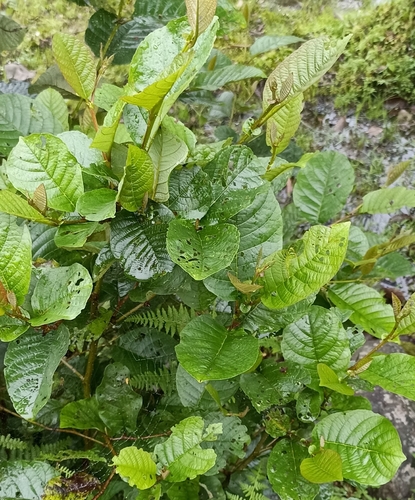
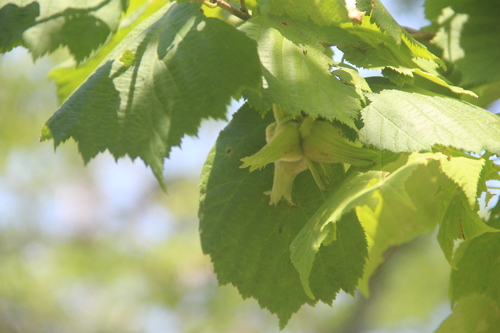
A shrub. It loses its leaves during the year. It grows 5 m tall. The leaves have teeth along the edge.
How to Grow
An easily grown plant, it succeeds in most soils, but is in general more productive of seeds when grown on soils of moderate fertility. It does less well in rich heavy soils or poor ones. Does well in a loamy soil. Very suitable for an alkaline soil, but it dislikes very acid soils. Plants are fairly wind tolerant. Members of this genus bear transplanting well and can be easily moved even when relatively large.
Propagation: Sow seed as soon as it is harvested in autumn in a cold frame; it germinates in late winter or spring. Stored seed should be pre-soaked in warm water for 48 hours, then given 2 weeks of warm stratification followed by 3–4 months of cold stratification. Germination takes 1–6 months at 20°C. Prick seedlings into individual pots when large enough to handle and grow on in a cold frame or sheltered spot through their first winter. Plant out into permanent positions in late spring or early summer. Layering in autumn is easy and takes about 6 months. Suckers can be divided in early spring and planted straight into permanent positions.
Medicinal Uses
None known
Other Uses
An oil is obtained from the seed.
Wikipedia
Source ↗Corylus sieboldiana is a species of flowering plant in the family Betulaceae. It is native to several parts of Eastern Asia, Including Amur, Inner Mongolia, Khabarovsk, Manchuria, Korea and Japan.
Other Information
It is cultivated.
Notes
There are about 15 Corylus species.
Names & Synonyms
Zhen zi
References (7)
- Chen, B. & Qiu, Z., Consumer's Attitudes towards Edible Wild Plants, Ishikawa Prefecture, Japan. p 23 www.hindawi.com/journals/ijfr/aip/872413.pdf
- Kang, Y., et al, 2014, Wild food plants used by the Tibetans of Gongba Valley (Zouqu country, Gansu, China) Journal of Ethnobiology and Ethnomedicine 10:20
- Hwang, HS, et al, 2014, Distribution characteristics of plant in the Ungseokbong Mountain, Gyeongsangnam-do, Korea. Journal of Asia-Pacific Biodiversity. 7(2014) e164-e178
- Mus. bot. 1:310. 1851
- Plants for a Future, The Field, Penpol, Lostwithiel, Cornwall, PL22 0NG, UK. http://www.scs.leeds.ac.uk/pfaf/
- Wickens, G.E., 1995, Edible Nuts. FAO Non-wood forest products. FAO, Rome. p 118
- Zeven, A. C. & de West, J. M. J., 1982, Dictionary of cultivated plants and their regions of diversity. Wageningen. p 34