Kyllinga polyphylla
Willd. ex Kunth
CyperaceaeSpice/Beverage
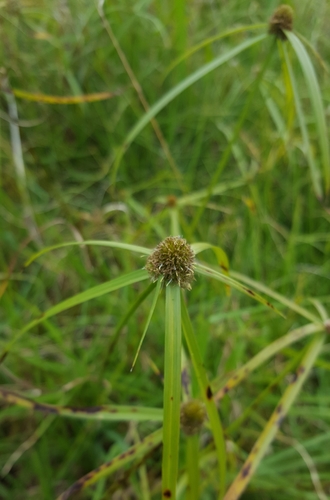
iNaturalist · cc-by-nc
(c) François Rousseu, some rights reserved (CC BY-NC)
(c) François Rousseu, some rights reserved (CC BY-NC)
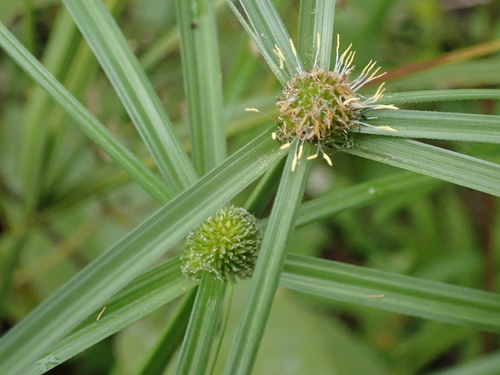
iNaturalist · cc-by-nc
(c) Max Hsieh(雁子), some rights reserved (CC BY-NC)
(c) Max Hsieh(雁子), some rights reserved (CC BY-NC)
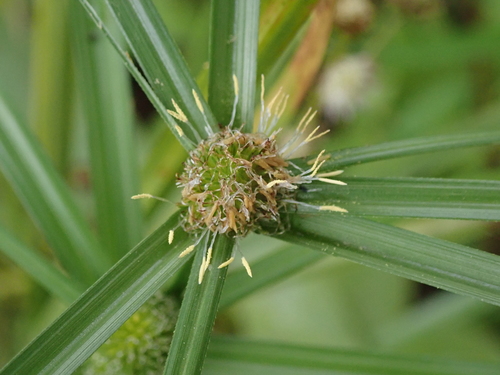
iNaturalist · cc-by-nc
(c) Max Hsieh(雁子), some rights reserved (CC BY-NC)
(c) Max Hsieh(雁子), some rights reserved (CC BY-NC)
What to Eat
Edible parts: Plant - tea
The whole plant is brewed as herbal tea.
Where to Find It
It is a subtropical plant.
Asia, China, Pacific, Rotuma,
Countries: United Arab Emirates, Afghanistan, Armenia, Australia, Azerbaijan, Bangladesh, Bahrain, Brunei, Bhutan, China, Fiji, Micronesia, Georgia, Indonesia, Israel, India, Iraq, Iran, Jordan, Japan, Kyrgyzstan, Cambodia, Kiribati, North Korea, South Korea, Kuwait, Kazakhstan, Laos, Lebanon, Sri Lanka, Marshall Islands, Myanmar, Mongolia, Maldives, Malaysia, Nepal, Nauru, New Zealand, Oman, Papua New Guinea, Philippines, Pakistan, Palau, Qatar, Saudi Arabia, Solomon Islands, Singapore, Syria, Thailand, Tajikistan, Timor-Leste, Turkmenistan, Tonga, Turkey, Tuvalu, Taiwan, Uzbekistan, Vietnam, Vanuatu, Samoa, Yemen
How to Identify
A sedge. It has thick creeping rhizomes. The stalks are 3 angled and 25-90 cm tall.
Medicinal Uses
Used traditionally as a herbal tea for medicinal purposes.
Other Information
It is sold in local markets in China.
Notes
Medicine.
Names & Synonyms
Wu gong cao
Cyperus aromaticus (Ridl.) Mattf. & KukKyllinga aromatica Ridl.and others
References (1)
- Li, D. et al, 2017, Ethnobotanical survey of herbal tea plants from the traditional markets in Chaoshan, China. Journal of Ethnopharmacology. 205 (2017) 195-206
More from Cyperaceae

Actinoscirpus grossus
Giant bulrush, Greater club-rush

Actinoscirpus grossus var. kysoor
Amphiscirpus nevadensis
Nevada bulrush, Great basin bulrush

Bolboschoenus caldwellii
Sea club rush, Marsh club rush, Seaside bulrush

Bolboschoenus fluviatilis
Marsh club rush, River bulrush, Kukuraho, Purua grass

Bolboschoenus glaucus