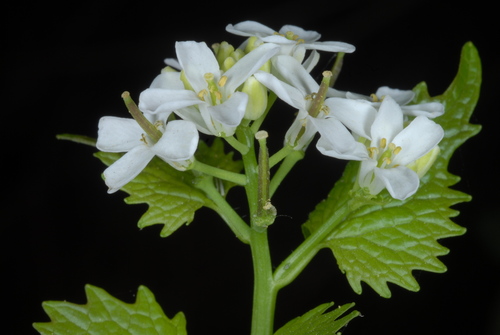
Cardamine concatenata
(Michx.) Alph.Wood.
Cut-leaved toothwort
BrassicaceaeRoots

iNaturalist · cc-by-sa
(c) Judy Gallagher, some rights reserved (CC BY-SA), uploaded by Judy Gallagher
(c) Judy Gallagher, some rights reserved (CC BY-SA), uploaded by Judy Gallagher
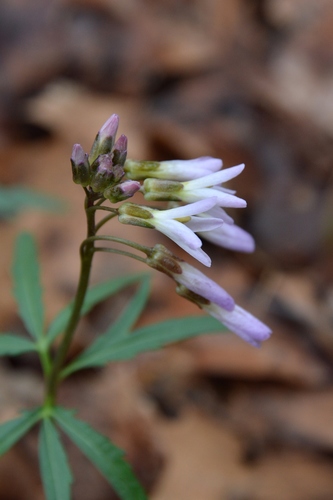
iNaturalist · cc-by-nc
(c) Mark Kluge, some rights reserved (CC BY-NC), uploaded by Mark Kluge
(c) Mark Kluge, some rights reserved (CC BY-NC), uploaded by Mark Kluge

iNaturalist · cc-by-nc
(c) tlit46, some rights reserved (CC BY-NC), uploaded by tlit46
(c) tlit46, some rights reserved (CC BY-NC), uploaded by tlit46
What to Eat
Edible parts: Root
The roots can be washed, chopped and ground in vinegar to be used as a horseradish substitute. According to Hussey (1974), "the Indians ate the pungent root."
Where to Find It
It is a temperate plant.
North America, USA,
Countries: Antigua & Barbuda, Barbados, Bahamas, Belize, Canada, Costa Rica, Cuba, Dominica, Dominican Republic, Grenada, Guatemala, Honduras, Haiti, Jamaica, St Kitts & Nevis, St Lucia, Mexico, Nicaragua, Panama, Puerto Rico, El Salvador, Trinidad & Tobago, United States, St Vincent
How to Identify
A cabbage family herb. The stems are erect and 20-40 cm tall. It has a long rhizome with fleshy segments.
Wikipedia
Source ↗Cardamine concatenata, the cutleaved toothwort, crow's toes, pepper root or purple-flowered toothwort, is a flowering plant in the family Brassicaceae. It is a perennial woodland wildflower native to eastern North America.
Names & Synonyms
Cardamine laciniata (Muhl. ex Willd.) Alph.WoodDentaria concatenata Michx.and others
References (1)
- Lim, T. K., 2015, Edible Medicinal and Non Medicinal Plants. Volume 9, Modified Stems, Roots, Bulbs. Springer p 33