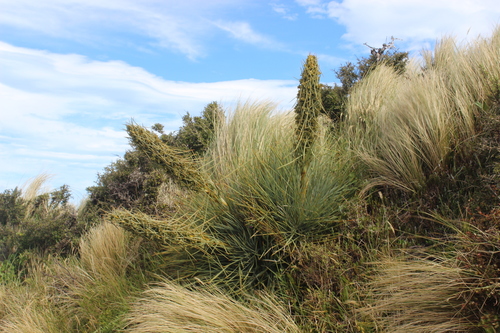
Astrantia maxima
Pall.
ApiaceaeLeaves
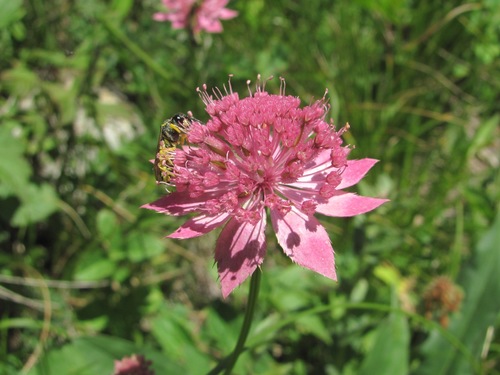
iNaturalist · cc-by-nc
(c) Gennadiy Okatov, some rights reserved (CC BY-NC), uploaded by Gennadiy Okatov
(c) Gennadiy Okatov, some rights reserved (CC BY-NC), uploaded by Gennadiy Okatov
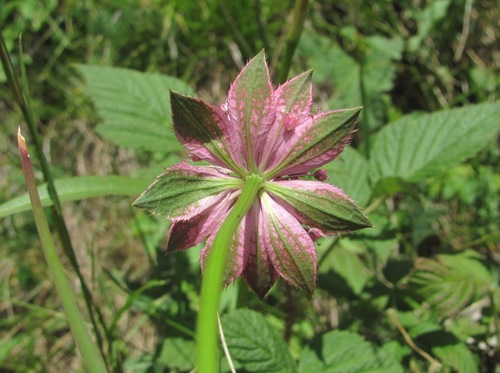
iNaturalist · cc-by-nc
(c) Gennadiy Okatov, some rights reserved (CC BY-NC), uploaded by Gennadiy Okatov
(c) Gennadiy Okatov, some rights reserved (CC BY-NC), uploaded by Gennadiy Okatov

iNaturalist · cc-by-nc
(c) Babette Köhler, some rights reserved (CC BY-NC), uploaded by Babette Köhler
(c) Babette Köhler, some rights reserved (CC BY-NC), uploaded by Babette Köhler
What to Eat
Edible parts: Leaves
The leaves are edible.
Where to Find It
It is a temperate plant.
Europe, Turkey, Türkiye,
Countries: Andorra, Albania, Austria, Bosnia & Herzegovina, Belgium, Bulgaria, Belarus, Switzerland, Cyprus, Czechia, Germany, Denmark, Estonia, Spain, Finland, France, United Kingdom, Greece, Croatia, Hungary, Ireland, Iceland, Italy, Liechtenstein, Lithuania, Luxembourg, Latvia, Monaco, Moldova, Montenegro, North Macedonia, Malta, Netherlands, Norway, Poland, Portugal, Romania, Serbia, Russia, Sweden, Slovenia, Slovakia, San Marino, Turkey, Ukraine
How to Identify
An herbaceous plant in the carrot family (Apiaceae) with edible leaves, found in temperate regions.
Wikipedia
Source ↗Astrantia maxima, (largest masterwort), is a species of flowering plant in the family Apiaceae. Growing to 90 cm (35 in) tall by 60 cm (24 in) broad, it is an herbaceous perennial, used in gardens. It is hardy to USDA Zone: 4-9. It has gained the Royal Horticultural Society's Award of Garden Merit.
Names & Synonyms
Astrantia helleborifolia Salsb.Astrantia heterophylla Willd.Astrantia speciosa Heynh.
References (1)
- Ertug, F, Yenen Bitkiler. Resimli Türkiye Florası -I- Flora of Turkey - Ethnobotany supplement