Crambe maritima
L.
Seakale
(c) Сергей, some rights reserved (CC BY-NC), uploaded by Сергей

(c) Bas Kers, some rights reserved (CC BY-NC-SA)
(c) Сергей, some rights reserved (CC BY-NC), uploaded by Сергей
What to Eat
Edible parts: Stems, Leaves, Vegetable, Fruit
Young leaves can be eaten raw or cooked like spinach. They have a pleasant, almost nutty flavour and work well in mixed salads or as a cooked vegetable. Older leaves develop bitterness and are less palatable. Young shoots are available in spring and can be eaten raw or cooked; they have a delicate nutty flavour and crisp texture. Usually blanched, they can be prepared like asparagus — when properly cooked they retain their crispness and develop an agreeable hazelnut-like flavour with a slight bitterness. The root is cooked and is rich in starch and sugars. Young flower buds can be eaten raw or cooked; the flowering shoots are harvested when about 10–15cm long and before the flowers open, and are used like sprouting broccoli — quite pleasant raw and delicious when lightly steamed.
Where to Find It
It is a temperate plant. It grows in coastal areas. It grows on shingle beaches in Britain. Hobart Botanical Gardens. It suits hardiness zones 5-9.
Africa, Asia, Australia, Balkans, Belarus, Belgium, Britain, Bulgaria, Canada, Denmark, East Africa, Estonia, Europe, Finland, France, Germany, India, Ireland, Italy, Jordan, Latvia, Lithuania, Mediterranean, Middle East, Netherlands, North America, Norway, Romania, Russia, Scandinavia, Slovenia, Sweden, Ukraine, Tasmania, Turkey, Türkiye, USA,
How to Identify
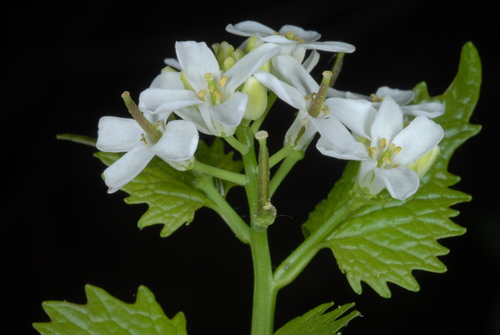
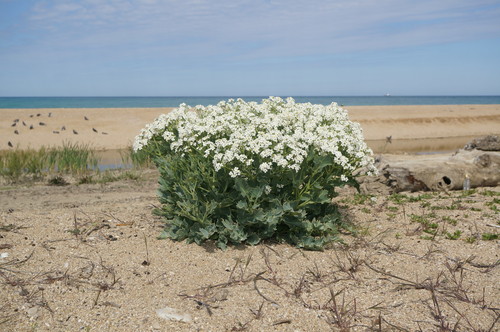
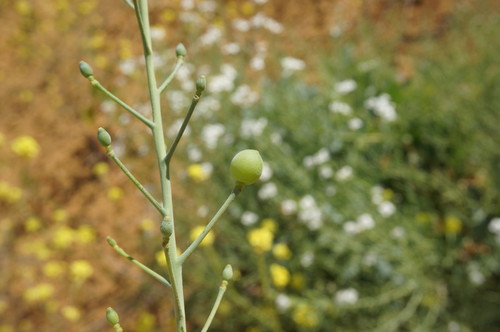
A cabbage family herb. It is a perennial plant up to 75 cm high. It spreads and forms mounds. The stems are thick. It has grey-green wavy edged leaves. The leaves can be up to 30 cm long. They are like cabbage leaves and arranged in a ring at the base. A robust flowering stalk comes from the centre of the leaves. The flowers are white and in clusters. These can be 0.6 m across.
Nutrition Score: 19/100
| Part | Moisture | kJ | kcal | Protein | Vit A | Vit C | Iron | Zinc |
|---|---|---|---|---|---|---|---|---|
| Stem boiled | 95.6 | 33 | 8 | 1.4 | — | 18 | 0.6 | — |
How to Grow
An easily grown plant, succeeding in a good loam and an open sunny position but also tolerating some shade. Prefers a slightly alkaline soil in a position sheltered from strong winds (this report totally conflicts with the plants native habitat which is on sea shores - we have found this species to be very tolerant of strong maritime winds though it does not like cold northerlies much). Tolerates poor soil and some shade. Dislikes acid and very stiff soils. Prefers a rich , well-drained very deep sandy loam and a pH of 7. Established plants are very drought tolerant. This species is hardy to about -20°c, it grows best in a cool maritime climate. Seakale is sometimes cultivated for its edible young shoots in the spring which are blanched by excluding light in order to make them less bitter. Two or three crops can usually be harvested each year. There are some named varieties. The roots are sometimes brought into a greenhouse in the winter and grown on there in order to produce an early crop of shoots. A deep-rooted and very long-lived plant, it dislikes root disturbance. The seed is dispersed by seawater, on which it can float for several days without loss of viability. A good bee plant.
Propagation: Seed — sow in March/April in a seedbed outdoors and either thin or transplant to permanent positions when plants are about 10cm tall. Plants can be cropped once more than 12 months old. Young plants are very attractive to slugs and will often need protection. As germination can be slow, sowing in pots in a cold frame is preferable; germination usually occurs in 3–26 weeks at 15°c. Prick seedlings into individual pots as soon as they are large enough to handle, and plant out when at least 10cm tall. Divide in spring or autumn by digging up the root clump and cutting off sections, each with at least one growing point; larger divisions can go straight into permanent positions while smaller ones are best potted and grown on in a cold frame until established. Root cuttings 3–10cm long taken in spring can be planted directly in the ground or potted in a greenhouse and planted out once growing strongly.
Medicinal Uses
None known.
Other Uses
Plants can be used for ground cover when spaced about 60cm apart each way.
Wikipedia
Source ↗Crambe maritima, common name sea kale, seakale or crambe, is a species of halophytic (salt-tolerant) flowering plant in the genus Crambe of the family Brassicaceae. It grows wild along the coasts of mainland Europe and the British Isles. The plant is related to the cabbage and was first cultivated as a vegetable in Britain around the turn of the 18th century. The blanched stems are eaten as a vegetable, and became popular in the mid-19th century.
Other Information
It is a commercially cultivated vegetable. The leaves are also foraged and eaten in restaurants in Sweden.
Notes
There are about 20 Crambe species.
Names & Synonyms
Chou marin, Meerkohl, Merekapstad, Morsko zelje, Strandkal
References (28)
- Ambasta, S.P. (Ed.), 2000, The Useful Plants of India. CSIR India. p 144
- Brickell, C. (Ed.), 1999, The Royal Horticultural Society A-Z Encyclopedia of Garden Plants. Convent Garden Books. p 311
- Brouk, B., 1975, Plants Consumed by Man. Academic Press, London. p 138
- Cundall, P., (ed.), 2004, Gardening Australia: flora: the gardener's bible. ABC Books. p 429
- Facciola, S., 1998, Cornucopia 2: a Source Book of Edible Plants. Kampong Publications, p 58
- Girard, N. J., 2020, Sustainable Foraging of Wild Edible Plants in Norway. A Biocultural Approach. M. Sc. thesis Norwegian University. p 129
- Hedrick, U.P., 1919, (Ed.), Sturtevant's edible plants of the world. p 223
- Hibbert, M., 2002, The Aussie Plant Finder 2002, Florilegium. p 75
- http://nordicfood lab/org/blog/2102/9/wild-edible-plants-an-overview
- Irving, M., 2009, The Forager Handbook, A Guide to the Edible Plants of Britain. Ebury Press p 80 (As maritime)
- Jardin, C., 1970, List of Foods Used In Africa, FAO Nutrition Information Document Series No 2.p 70
- Kalle, R. & Soukand, R., 2012, Historical ethnobotanical review of wild edible plants of Estonia (1770s-1960s) Acta Societatis Botanicorum Poloniae 81(4):271-281
- Kays, S. J., and Dias, J. C. S., 1995, Common Names of Commercially Cultivated Vegetables of the World in 15 languages. Economic Botany, Vol. 49, No. 2, pp. 115-152
- Kiple, K.F. & Ornelas, K.C., (eds), 2000, The Cambridge World History of Food. CUP p 1850
- Luczaj, L. et al, 2012, Wild food plant use in 21st century Europe: the disappearance of old traditions and the search for new cuisines involving wild edibles. Acta Soc Bot Pol 81(4):359–370
- Mabey, R., 1973, Food for Free. A Guide to the edible wild plants of Britain, Collins. p 107
- Macmillan, H.F. (Revised Barlow, H.S., et al), 1991, Tropical Planting and Gardening. Sixth edition. Malayan Nature Society. Kuala Lumpur. p 369
- Martin, F.W. & Ruberte, R.M., 1979, Edible Leaves of the Tropics. Antillian College Press, Mayaguez, Puerto Rico. p 188
- Plants for a Future database, The Field, Penpol, Lostwithiel, Cornwall, PL22 0NG, UK. http://www.scs.leeds.ac.uk/pfaf/
- Ryan, S., 2008, Dicksonia. Rare Plants Manual. Hyland House. p 99
- Terra, G.J.A., 1973, Tropical Vegetables. Communication 54e Royal Tropical Institute, Amsterdam, p 41
- Tronickova, E. & Krejcova, Z., 1987, Ortaggi, Instituto Geografico de Agostini, Cecoslovacchia. p 176
- Self, M., 199, Phoenix Seeds catalogue. p 7
- Sp. pl. 2:671. 1753
- USDA, ARS, National Genetic Resources Program. Germplasm Resources Information Network - (GRIN). [Online Database] National Germplasm Resources Laboratory, Beltsville, Maryland. Available: www.ars-grin.gov/cgi-bin/npgs/html/econ.pl (10 April 2000)
- van Wyk, B., 2005, Food Plants of the World. An illustrated guide. Timber press. p 154
- Wiersema, J. H. & Leon, B., 2013, World Economic Plants. A Standard Reference CRC Press. 2nd Ed. p 207
- World Checklist of Useful Plant Species 2020. Royal Botanic Gardens, Kew