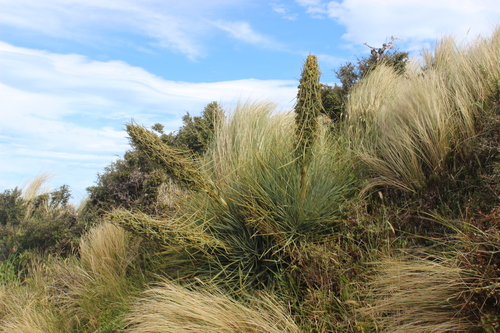
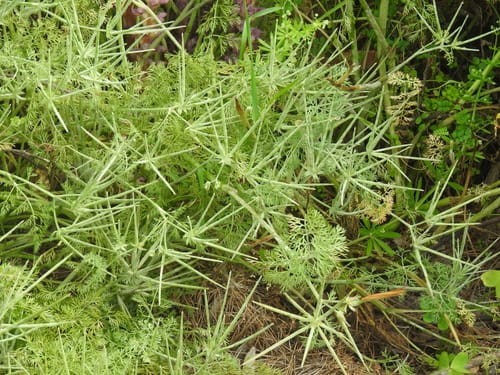
Scandix stellata
Banks & Sol.
ApiaceaeLeaves

iNaturalist · cc-by-nc
(c) Ron Frumkin, some rights reserved (CC BY-NC), uploaded by Ron Frumkin
(c) Ron Frumkin, some rights reserved (CC BY-NC), uploaded by Ron Frumkin
iNaturalist · cc-by-nc
(c) Γιώργος Παντάκης, some rights reserved (CC BY-NC)
(c) Γιώργος Παντάκης, some rights reserved (CC BY-NC)
What to Eat
Edible parts: Leaves
The leaves are edible and can be eaten.
Where to Find It
It is a temperate plant.
Asia, Central Asia, China, Tajikistan, Turkey, Türkiye,
Countries: United Arab Emirates, Afghanistan, Armenia, Azerbaijan, Bangladesh, Bahrain, Brunei, Bhutan, China, Georgia, Indonesia, Israel, India, Iraq, Iran, Jordan, Japan, Kyrgyzstan, Cambodia, North Korea, South Korea, Kuwait, Kazakhstan, Laos, Lebanon, Sri Lanka, Myanmar, Mongolia, Maldives, Malaysia, Nepal, Oman, Philippines, Pakistan, Qatar, Saudi Arabia, Singapore, Syria, Thailand, Tajikistan, Timor-Leste, Turkmenistan, Turkey, Taiwan, Uzbekistan, Vietnam, Yemen
How to Identify
A herb. It grows 10-30 cm tall. The leaves are oval and 6 cm long by 3 cm wide. The flowers have short stalks. The fruit is 16-28 mm long. The seed bearing part is covered with white bristles.
Names & Synonyms
Kilcik
Scandicium stellatum (Banks & Sol.) Thell.Scandix fedtschenkoana Koso-Pol.Scandix pinnatifida Vent.
References (1)
- Kaya, O. M., et al, 2020, An ethnobotanical research in Sanhurfa central district and attached Villages (Turkey). Indian Journal of Traditional Knowledge. Vol. 19(1) pp 7-23