Satyrium sceptrum
Schltr.
OrchidaceaeRoots
iNaturalist · cc-by-nc
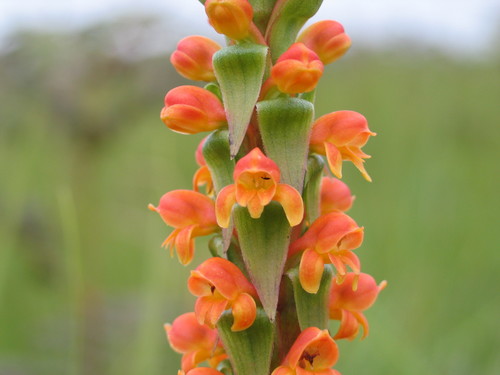
(c) Berit Gehrke, some rights reserved (CC BY-NC), uploaded by Berit Gehrke
(c) Berit Gehrke, some rights reserved (CC BY-NC), uploaded by Berit Gehrke
iNaturalist · cc-by
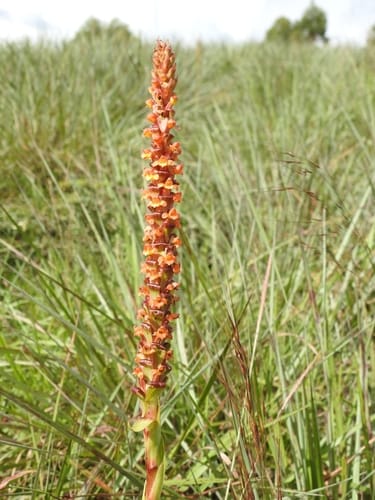
(c) Ryan van Huyssteen, some rights reserved (CC BY)
(c) Ryan van Huyssteen, some rights reserved (CC BY)
What to Eat
Edible parts: Tuber
The tubers are edible.
Where to Find It
It is a tropical plant.
Africa, East Africa, Tanzania,
Countries: Angola, Burkina Faso, Burundi, Benin, Botswana, Congo (DRC), Central African Republic, Congo (Republic), Cote d'Ivoire, Cameroon, Cape Verde, Djibouti, Algeria, Egypt, Eritrea, Ethiopia, Gabon, Ghana, Gambia, Guinea, Equatorial Guinea, Guinea-Bissau, Kenya, Comoros, Liberia, Lesotho, Libya, Morocco, Madagascar, Mali, Mauritania, Mauritius, Malawi, Mozambique, Namibia, Niger, Nigeria, Rwanda, Seychelles, Sudan, Sierra Leone, Senegal, Somalia, South Sudan, Sao Tome & Principe, Eswatini, Chad, Togo, Tunisia, Tanzania, Uganda, South Africa, Zambia, Zimbabwe
How to Identify
An orchid. It grows 40-90 cm tall. The tubers are 2-5 cm long and narrowly oval. The sterile shoot has 3-4 leaves with the lowest 2 sheathing the stem. The flowering stem has 10 sheathing leaves up to 16 cm long. The flowering shoot is 7-26 cm long by 3-3.5 cm wide. There are many flowers. They are orange, yellow or red. The flowers curve outwards.
Names & Synonyms
Satyrium acutirostrum Summerh.
References (1)
- Hamisy, W. C., 2007, Development of Conservation Strategies for the Wild Edible Orchid in Tanzania. National Plant Genetic Resources Centre. Arusha, Tanzania. p 12 (As Satyrium acutirostrum)