Muellerina celastroides
(Sieber ex Schult. & Schult.f.) Tiegh
LoranthaceaeFruit

iNaturalist · cc-by-nc
(c) Russell Cumming, some rights reserved (CC BY-NC), uploaded by Russell Cumming
(c) Russell Cumming, some rights reserved (CC BY-NC), uploaded by Russell Cumming

iNaturalist · cc-by-nc
(c) Russell Cumming, some rights reserved (CC BY-NC), uploaded by Russell Cumming
(c) Russell Cumming, some rights reserved (CC BY-NC), uploaded by Russell Cumming
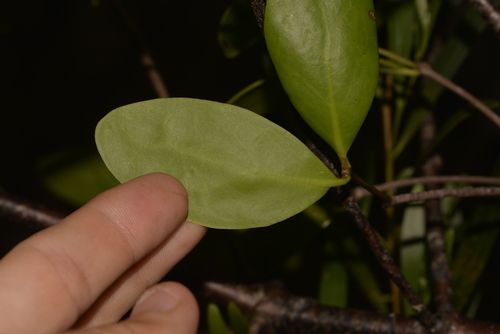
iNaturalist · cc-by-nc-sa
(c) Nick Lambert, some rights reserved (CC BY-NC-SA), uploaded by Nick Lambert
(c) Nick Lambert, some rights reserved (CC BY-NC-SA), uploaded by Nick Lambert
What to Eat
Edible parts: Fruit
The fruit is edible, though the seeds should be removed before consumption.
How to Identify
A mistletoe. It grows attached to other plants. It can be erect or spreading. The leaves are narrowly oblong and 2.5-7 cm long by 15-40 mm wide. The tip is rounded. The flowers are in 1-3 groups of 3 flowers. The fruit is pear shaped and 7-11 mm long. They are green to red.
Wikipedia
Source ↗Muellerina celastroides, common names Banksia mistletoe and coast mistletoe, is a hemiparasitic aerial shrub in the family Loranthaceae. The species is endemic to New South Wales, Victoria and Queensland.
Names & Synonyms
Loranthus celastroides Sieber ex Schult. & Schult.f.Phrygilanthus celastroides (Sieber ex Schult. & Schult.f.) Eichler
References (1)
- Caton, J.M. & Hardwick, R. J., 2016, Field Guide to Useful Native Plants from Temperate Australia. Harbour Publishing House. p 352


