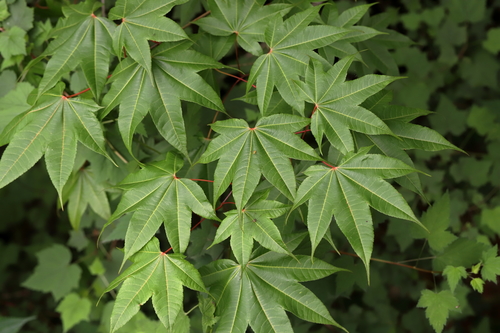
Acer oblongum
Wall. ex DC.
Himalayan maple

(c) Ramnarayan K, some rights reserved (CC BY), uploaded by Ramnarayan K
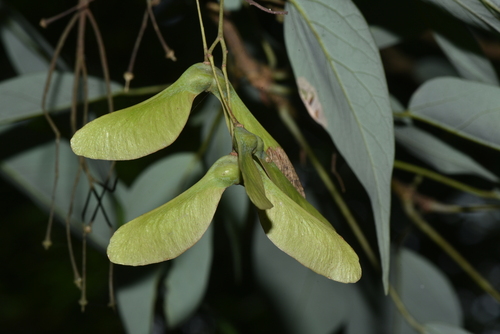
(c) Taukeer Alam, some rights reserved (CC BY-NC), uploaded by Taukeer Alam
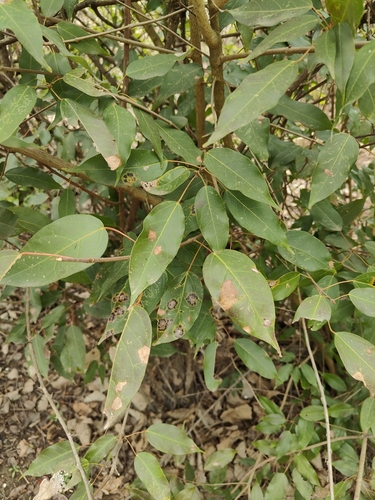
(c) prashantsharma92749, some rights reserved (CC BY-NC)
What to Eat
Edible parts: ?
None known.
Where to Find It
It is a subtropical plant. It grows between 1,000-3,000 m above sea level.
Asia, China, Himalayas, India, Myanmar, Nepal, Pakistan, Sikkim,
How to Identify
A shrub or small tree. It grows 5 -20 m tall. There are prickles along the stem. The leaves are twice divided and there are 8-18 pairs of pinnae. There are up to 50 pairs of pinnules on each pinnae. The flowers are yellow. They are in large clusters at the ends of branches. The pods are flattened.
How to Grow
Of easy cultivation, it prefers a good moist well-drained soil in a sunny position but tolerates some shade. Grows well in heavy clay soils. Chlorosis can sometimes develop as a result of iron deficiency when the plants are grown in alkaline soils, but in general maples are not fussy as to soil pH. This species is found on acid soils in the wild. This species is not hardy in all parts of Britain, forms from China are hardier but even then this species is better grown in the warmer parts of the country. Most maples are bad companion plants, inhibiting the growth of nearby plants.
Propagation: Seed is best sown as soon as it is ripe in a cold frame, where it usually germinates the following spring. Stored seed should be pre-soaked for 24 hours and then stratified for 2–4 months at 1–8°C, though germination can be slow. Seed can be harvested green — fully developed but before it has dried and produced germination inhibitors — and sown immediately for late-winter germination. Seed harvested too early will produce very weak plants or none at all. Prick seedlings into individual pots once large enough to handle and grow on until they reach 20cm or more before planting out permanently. Layering is successful with most species in this genus and takes about 12 months. Cuttings of young shoots taken in June or July should have 2–3 pairs of leaves plus one pair of buds at the base; remove a thin slice of bark at the base and use a rooting hormone. Rooted cuttings must produce new growth during the summer before being potted up, or they are unlikely to survive the winter. Where seed is unavailable, the plant can be grafted onto A. buergerianum.
Medicinal Uses
None known
Other Uses
Leaves packed around apples, root crops, and similar produce help preserve them. The wood is close-grained and moderately hard, and is used for agricultural implements, minor construction, and cups.
Wikipedia
Source ↗Acer oblongum, common name Himalayan maple, evergreen maple and Kashmir maple, is an evergreen Asian species of maple in the family Sapindaceae.
Names & Synonyms
Putli
References (1)
- Sundriyal, M. & Sundriyal, R. C., 2004, Structure, Phenology, Fruit Yield, and Future Prospects of some Prominent Wild Edible Plant Species of the Sikkim Himalaya, India. Journal of Ethnobiology 24(1): 113-138