Sloanea dasycarpa
(Benth.) Hemsl.
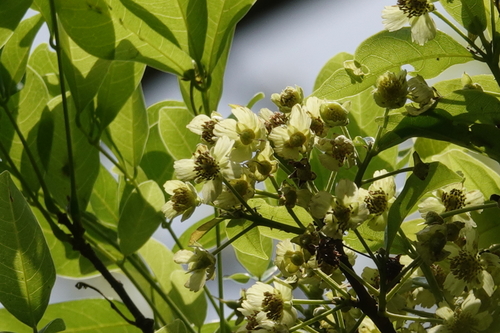
iNaturalist · cc-by-nc
(c) 謝忠良, some rights reserved (CC BY-NC), uploaded by 謝忠良
(c) 謝忠良, some rights reserved (CC BY-NC), uploaded by 謝忠良

iNaturalist · cc-by-nc
(c) JODY HSIEH, some rights reserved (CC BY-NC), uploaded by JODY HSIEH
(c) JODY HSIEH, some rights reserved (CC BY-NC), uploaded by JODY HSIEH

iNaturalist · cc-by-nc
(c) 郭伯川, some rights reserved (CC BY-NC), uploaded by 郭伯川
(c) 郭伯川, some rights reserved (CC BY-NC), uploaded by 郭伯川
Where to Find It
It is a subtropical plant. It grows in moist forests between 1,500-2,000 m above sea level.
Asia, Bhutan, India, Myanmar, Nepal, Northeastern India, SE Asia, Sikkim, Taiwan, Tibet, Vietnam,
Countries: United Arab Emirates, Afghanistan, Armenia, Azerbaijan, Bangladesh, Bahrain, Brunei, Bhutan, China, Georgia, Indonesia, Israel, India, Iraq, Iran, Jordan, Japan, Kyrgyzstan, Cambodia, North Korea, South Korea, Kuwait, Kazakhstan, Laos, Lebanon, Sri Lanka, Myanmar, Mongolia, Maldives, Malaysia, Nepal, Oman, Philippines, Pakistan, Qatar, Saudi Arabia, Singapore, Syria, Thailand, Tajikistan, Timor-Leste, Turkmenistan, Turkey, Taiwan, Uzbekistan, Vietnam, Yemen
How to Identify
A tree. It grows 12-25 m tall. The leaves are simple and alternate. They are 10-20 cm long by 4-7 cm wide. The flowers occur singly in the axils of leaves. They are yellowish white. The fruit capsule is 3 cm across. It is round or oval and has 4-5 valves. They are woody with dense spines. The seeds are 8 mm long and black with a thin red aril.
Notes
The name is ambiguous.
Names & Synonyms
Echinocarpus dasycarpus Benth.Sloanea formosana Li
References (1)
- Sundriyal, M. & Sundriyal, R. C., 2004, Structure, Phenology, Fruit Yield, and Future Prospects of some Prominent Wild Edible Plant Species of the Sikkim Himalaya, India. Journal of Ethnobiology 24(1): 113-138 (As Echinocarpus desycarpus)


