Brachystemma calycinum
D. Don
CaryophyllaceaeLeaves
iNaturalist · cc-by-nc
(c) Phuentsho, some rights reserved (CC BY-NC), uploaded by Phuentsho
(c) Phuentsho, some rights reserved (CC BY-NC), uploaded by Phuentsho
iNaturalist · cc-by-nc
(c) pratyeka, some rights reserved (CC BY-NC)
(c) pratyeka, some rights reserved (CC BY-NC)
What to Eat
Edible parts: Leaves
The leaves are eaten as a vegetable and are sold in local markets.
Where to Find It
It is a subtropical plant.
Asia, China, India, Northeastern India,
Countries: United Arab Emirates, Afghanistan, Armenia, Azerbaijan, Bangladesh, Bahrain, Brunei, Bhutan, China, Georgia, Indonesia, Israel, India, Iraq, Iran, Jordan, Japan, Kyrgyzstan, Cambodia, North Korea, South Korea, Kuwait, Kazakhstan, Laos, Lebanon, Sri Lanka, Myanmar, Mongolia, Maldives, Malaysia, Nepal, Oman, Philippines, Pakistan, Qatar, Saudi Arabia, Singapore, Syria, Thailand, Tajikistan, Timor-Leste, Turkmenistan, Turkey, Taiwan, Uzbekistan, Vietnam, Yemen
How to Identify
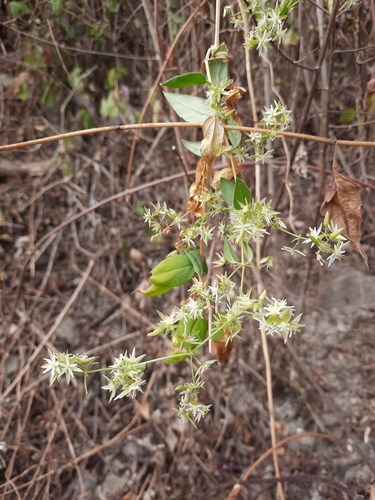
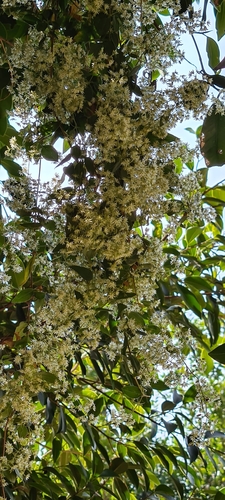
A herb or shrub. The stems can be climbing. They can be 6 m tall. They are 4 angled and shiny. The leaves are 3.5-7.5 cm long by 1-1.5 cm wide. They taper to the tip. There are many flowers in a group. They are white. The fruit is a round capsule 2.5 mm across. The seed is 1.5 mm across.
Other Information
It is sold in local markets.
Names & Synonyms
Du sha ma, Pi si li guo, Ya ying ren
References (2)
- Cao, Y., et al, 2020, Ethnobotanical study on wild edible plants used by three trans-boundary ethnic groups in Jiangcheng County, Pu’er, Southwest China. Journal of Ethnobiology and Ethnomedicine (2020) 16:66
- Taram, M., et al, 2018, Wild Food Plant Resources of Komkar Adi Tribe of Upper Siang District in Arunachal Pradesh, India. Bulletin of Arunachal Forest Research, Vol. 33(2), 27-35