Calophyllum polyanthum
Wall. ex Choisy
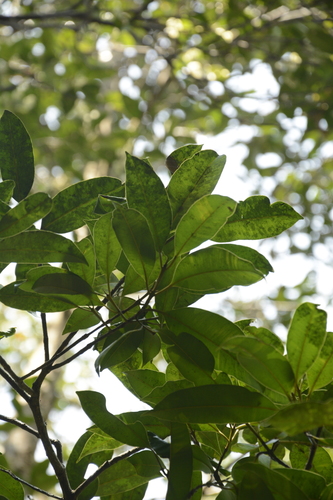
(c) Siddarth Machado, some rights reserved (CC BY), uploaded by Siddarth Machado
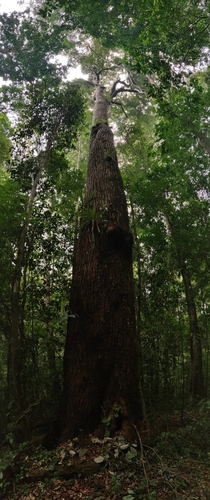
(c) T R Shankar Raman, some rights reserved (CC BY)
What to Eat
Edible parts: Fruit ?
The wood is used in construction, paper pulp, and furniture making. The timber is also used for making tea chests, tent poles, mathematical instruments, construction of ghat roads particularly leading to the sea coast. Seeds are used for illuminating purpose. Fruits are edible. Wood is anti-termitic.
Where to Find It
It is a subtropical plant. It grows in dense forests between 1,100-1,800 m above sea level.
Asia, Bangladesh, Bhutan, India, Laos, Myanmar, Thailand, Vietnam,
How to Identify
A tree. It grows 25 m tall. The flowers are white. The fruit are round and 2-2.5 cm across.
How to Grow
A plant of the wet, mainly lowland tropics, where it is found at elevations up to 1,500 metres. It grows best in areas where annual daytime temperatures are within the range 28 - 33°c, but can tolerate 16 - 38°c. It can be killed by temperatures of 4°c or lower. It prefers a mean annual rainfall in the range 4,000 - 6,000mm, but tolerates 2,000 - 8,000mm. Grows best in a sunny position, also succeeding in light shade. Succeeds in most well-drained soils of at least moderate fertility. Prefers a pH in the range 5.5 - 6.5, tolerating 4.5 - 7.
Other Uses
An oil obtained from the seed is used as an illuminant. The wood is used for ship and bridge building, general construction, and furniture making.
Wikipedia
Source ↗Calophyllum polyanthum is a species of flowering plant belonging to the genus Calophyllum of the family Calophyllaceae, commonly known as the poonspar tree, sirpoon tree, punnapine, pinnapai, punnappine, kattupunna and malampunna. This tree is native to the Western Ghats in India (Assam, Barak Valley, and Kerala), where it grows in abundance there. It is also found in Andaman & Nicobar Island, Bangladesh, Bhutan, Laos, Myanmar, Thailand and Vietnam.
Notes
The name is ambiguous. Also in the family Colaphyllaceae.
Names & Synonyms
Kamdob
References (1)
- Pasha, M. K. & Uddin, S. B., 2019, Minor Edible Fruits of Bangladesh. Bangladesh J. Plant Taxon. 26(2): 299–313


