Aidia densiflora
(Wall.) Masam.
RubiaceaeFruit

iNaturalist · cc-by-nc-sa
(c) 106611639464075912591, some rights reserved (CC BY-NC-SA), uploaded by 106611639464075912591
(c) 106611639464075912591, some rights reserved (CC BY-NC-SA), uploaded by 106611639464075912591
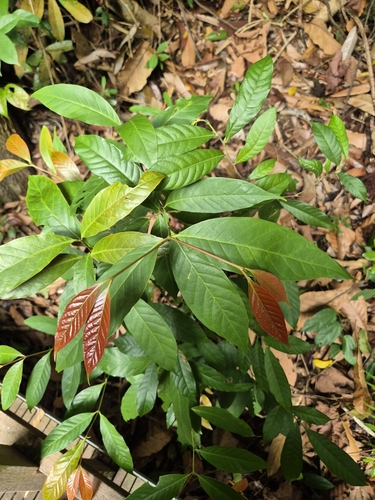
iNaturalist · cc-by-nc
(c) Muhd Nasry, some rights reserved (CC BY-NC)
(c) Muhd Nasry, some rights reserved (CC BY-NC)
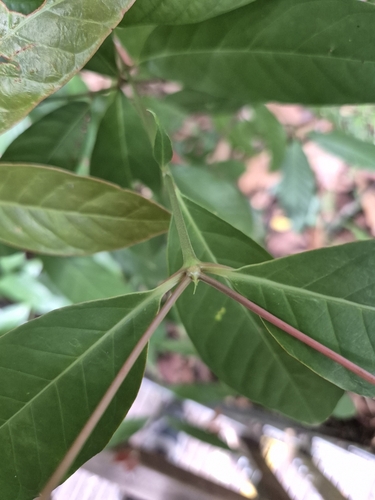
iNaturalist · cc-by-nc
(c) Muhd Nasry, some rights reserved (CC BY-NC)
(c) Muhd Nasry, some rights reserved (CC BY-NC)
What to Eat
Edible parts: Fruit
The fruit is eaten.
Where to Find It
It is a subtropical plant.
Asia, India, Northeastern India,
Countries: United Arab Emirates, Afghanistan, Armenia, Azerbaijan, Bangladesh, Bahrain, Brunei, Bhutan, China, Georgia, Indonesia, Israel, India, Iraq, Iran, Jordan, Japan, Kyrgyzstan, Cambodia, North Korea, South Korea, Kuwait, Kazakhstan, Laos, Lebanon, Sri Lanka, Myanmar, Mongolia, Maldives, Malaysia, Nepal, Oman, Philippines, Pakistan, Qatar, Saudi Arabia, Singapore, Syria, Thailand, Tajikistan, Timor-Leste, Turkmenistan, Turkey, Taiwan, Uzbekistan, Vietnam, Yemen
How to Identify
A subtropical shrub or small tree in the Rubiaceae family, producing edible fruit.
Names & Synonyms
Tepakjang
Aidia coriacea (Miq.) Tirveng.
Cupia densiflora (Wall.) DC.Randia densiflora (Wall.) Benth.Webera densiflora Wall.and several others
References (1)
- Mozhui, R., et al, 2011, Wild edible fruits used by the tribals of Dimapur district of Nagaland, India. Pleione 5(1): 56 - 64. (As Randia densiflora)


