Crocus biflorus subsp. tauri
(Maw) B. Mathew
IridaceaeRoots

iNaturalist · cc-by
(c) Luca Fornasari, some rights reserved (CC BY), uploaded by Luca Fornasari
(c) Luca Fornasari, some rights reserved (CC BY), uploaded by Luca Fornasari
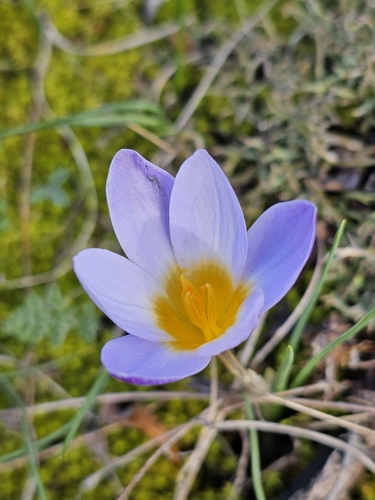
iNaturalist · cc-by-nc
(c) Markus Ackermann, some rights reserved (CC BY-NC), uploaded by Markus Ackermann
(c) Markus Ackermann, some rights reserved (CC BY-NC), uploaded by Markus Ackermann
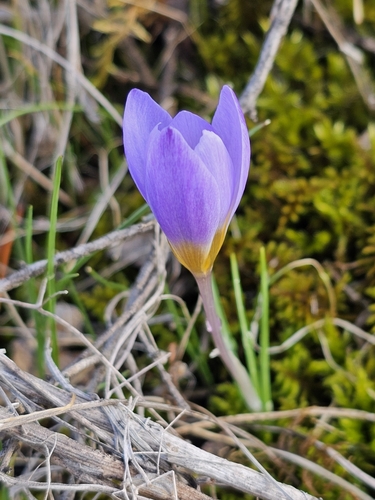
iNaturalist · cc-by-nc
(c) Markus Ackermann, some rights reserved (CC BY-NC), uploaded by Markus Ackermann
(c) Markus Ackermann, some rights reserved (CC BY-NC), uploaded by Markus Ackermann
What to Eat
Edible parts: Corm
The corm is peeled and eaten fresh.
Where to Find It
It is a temperate plant.
Europe, Turkey, Türkiye,
Countries: Andorra, Albania, Austria, Bosnia & Herzegovina, Belgium, Bulgaria, Belarus, Switzerland, Cyprus, Czechia, Germany, Denmark, Estonia, Spain, Finland, France, United Kingdom, Greece, Croatia, Hungary, Ireland, Iceland, Italy, Liechtenstein, Lithuania, Luxembourg, Latvia, Monaco, Moldova, Montenegro, North Macedonia, Malta, Netherlands, Norway, Poland, Portugal, Romania, Serbia, Russia, Sweden, Slovenia, Slovakia, San Marino, Turkey, Ukraine
How to Identify
A temperate herbaceous plant in the iris family (Iridaceae) that grows from a corm.
Wikipedia
Source ↗Crocus biflorus, the silvery crocus or scotch crocus, is a species of flowering plant in the family Iridaceae. It is native to south-eastern Europe and south-western Asia, including Italy, the Balkans, Ukraine, Turkey, Caucasus, Iraq, and Iran. It is a cormous perennial growing to 6 cm (2.4 in) tall and wide. It is a highly variable species, with flowers in shades of pale mauve or white, often with darker stripes on the outer tepals. The flowers appear early in spring.
Names & Synonyms
Cigdem, Pivik
Crocus roopiae WoronowCrocus tauri Maw
References (1)
- Dogan, A. & Tuzlaci, E., 2015, Wild Edible Plants of Pertek (Tunceli-Turkey). Marmara Pharmaceutical Journal 19: 126-135


