Phalaenopsis amabilis
(L.) Blume

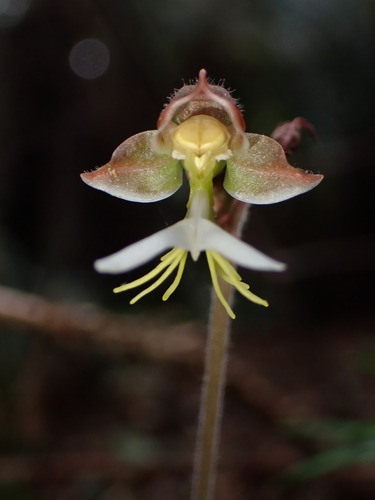
(c) 夏曼威廉斯, some rights reserved (CC BY-NC), uploaded by 夏曼威廉斯
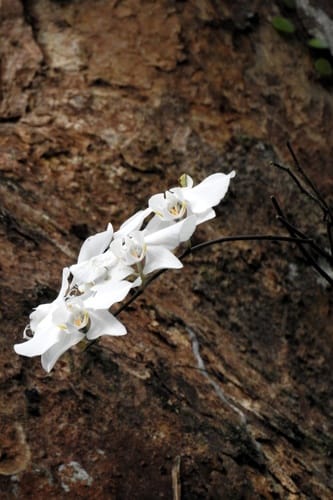
(c) Pauline Carmel Joy Eje, some rights reserved (CC BY)
What to Eat
Edible parts: Leaves
The leaves are eaten fresh in salads or cooked as a vegetable.
Where to Find It
It is a tropical plant.
Asia, Indonesia, SE Asia,
How to Identify
A tropical orchid with edible leaves. The leaves are eaten fresh in salads or cooked as a vegetable.
Wikipedia
Source ↗Phalaenopsis amabilis, commonly known as moon orchid, moth orchid, or mariposa orchid, is a species of flowering plant in the orchid family Orchidaceae. It is widely cultivated as a decorative houseplant. It is an epiphytic or lithophytic herb with long, thick roots, between two and eight thick, fleshy leaves with their bases hiding the stem and nearly flat, white, long-lasting flowers on a branching flowering stem with up to ten flowers on each branch. Phalaenopsis amabilis is native to Maritime Southeast Asia, New Guinea, and Australia. It has three subspecies: P. a. amabilis, native to the Philippines (Palawan), Malaysia (Borneo), Indonesia (Borneo, Sumatra, and Java); P. a. moluccana, native to the Maluku Islands (Seram and Buru Islands) and Sulawesi of Indonesia; and P. a. rosenstromii, native to Papua New Guinea and Australia (northeastern Queensland). Phalaenopsis amabilis is one of the three national flowers of Indonesia, where it is known as anggrek bulan (lit. "moon orchid").
Names & Synonyms
References (1)
- Nurfadilah, S., 2020, Utilization of orchids of Wallacea region and implication for conservation. IOP Conf. Series: Earth and Environmental Science 473 (2020) 012063