Pandanus castaneus
H. St John & B. C. Stone
Faket

President and Fellows of Harvard College

President and Fellows of Harvard College

President and Fellows of Harvard College
What to Eat
Edible parts: Fruit - oil
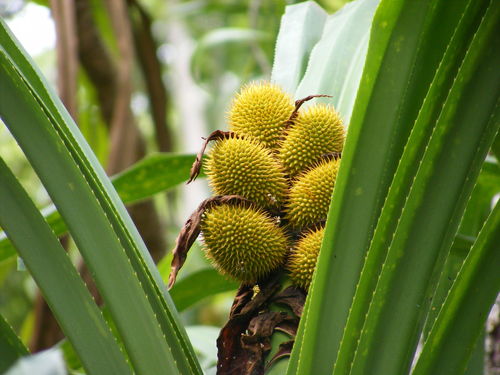
Fruit - fleshy and fibrous, it is a rich source of oil. Wrapped in leaves and baked in a hot stone oven, the solid fat in the fruit liquifies to become oil. This oil is expressed by hand to make a sauce that is spread over foods such as leafy greens or baked taro. The cylindrical cephalium (fruiting body) is rounded at both ends, around 25cm long and 8cm wide, composed of numerous drupes. The drupes are crowded around a fleshy mass (the mesocarp).
How to Identify
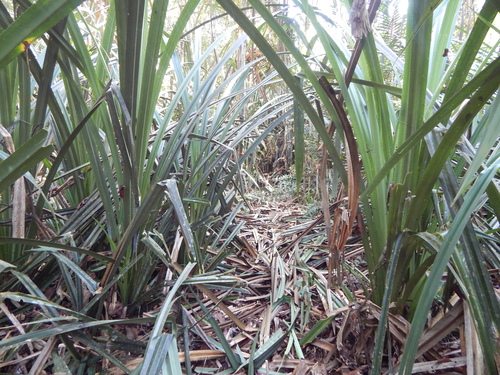
A tropical screwpine (pandanus) with red fruit, belonging to the Pandanaceae family.
How to Grow
Species in this genus generally grow well in most moist, well-dained soils and a sunny position A dioecious species, both male and female forms need to be grown if fruit and seed are required.
Other Uses
Although we have seen no specific records for this species, the leaves of most members of this genus are used locally for weaving a range of items such as mats, bags and baskets. The leaves, which are usually tough and fibrous, are long, narrow and sword-shaped and can easily be split into strips for weaving.
References (2)
- Hyndman, D. C., 1984, Ethnobotany of Wopkaimin Pandanus: Significant Papua New Guinea Plant Resource. Economic Botany Vol. 38 No. 3 pp 287-303
- World Checklist of Useful Plant Species 2020. Royal Botanic Gardens, Kew