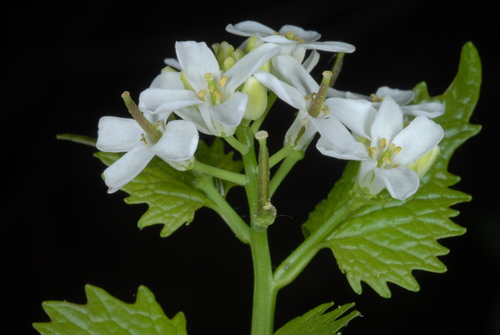
Brassica rupestris
Raf.
Wild leafy kale
BrassicaceaeLeaves
iNaturalist · cc-by
(c) Riccardo Rocca, some rights reserved (CC BY), uploaded by Riccardo Rocca
(c) Riccardo Rocca, some rights reserved (CC BY), uploaded by Riccardo Rocca

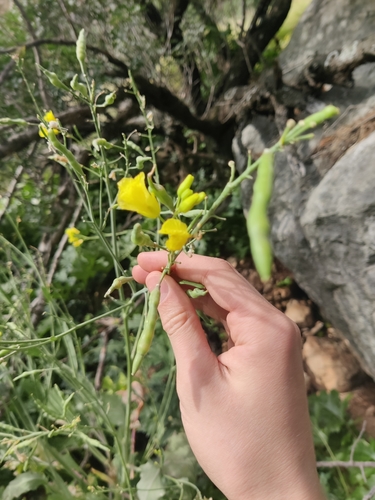
iNaturalist · cc-by-nc
(c) Li Jianong, some rights reserved (CC BY-NC)
(c) Li Jianong, some rights reserved (CC BY-NC)
What to Eat
Edible parts: Leaves
The leaves are eaten.
Where to Find It
It is a Mediterranean plant. It grows on limestone cliffs.
Europe, Italy, Mediterranean, Sicily,
Countries: Andorra, Albania, Austria, Bosnia & Herzegovina, Belgium, Bulgaria, Belarus, Switzerland, Cyprus, Czechia, Germany, Denmark, Algeria, Estonia, Egypt, Spain, Finland, France, United Kingdom, Greece, Croatia, Hungary, Ireland, Israel, Iceland, Italy, Lebanon, Liechtenstein, Lithuania, Luxembourg, Latvia, Libya, Morocco, Monaco, Moldova, Montenegro, North Macedonia, Malta, Netherlands, Norway, Poland, Portugal, Romania, Serbia, Russia, Sweden, Slovenia, Slovakia, San Marino, Syria, Tunisia, Turkey, Ukraine
How to Identify
A Mediterranean herb in the cabbage family that grows on limestone cliffs, with edible leaves and the ability to be propagated from seed.
How to Grow
Plants can be grown from seed.
Wikipedia
Source ↗Brassica rupestris is a species of flowering plant in the family Brassicaceae, native to southwestern Italy and Sicily. The plant is known to grow on vertical limestone cliffs. In the past it was proposed, based on morphology, that Brassica rupestris contributed to the ancestry of either kale or kohlrabi, but DNA evidence shows that it did not.
Names & Synonyms
Caulu di rocca, Cavulazzu
Brassica crispa Raf.Brassica montana Raf.Brassica oleracea var. rupestris (Raf.) Paol.Brassica sempervirens Ten. ex Schrank
References (3)
- Geraci, A., et al, 2018, The wild taxa utilized as vegetables in Sicily (Italy): a traditional component of the Mediterranean diet. Journal of Ethnobiology and Ethnomedicine (2018) 14:14
- Licata, M., et al, 2016, A survey of wild plant species for food use in Sicily (Italy) – results of a 3-year study in four Regional Parks. Journal of Ethnobiology and Ethnomedicine 12:12
- Pasta, S., et al, 2020, An Updated Checklist of the Sicilian Native Edible Plants: Preserving the Traditional Ecological Knowledge of Century-Old Agro-Pastoral Landscapes. Frontiers in Plant Science. Volume 11|Article 388