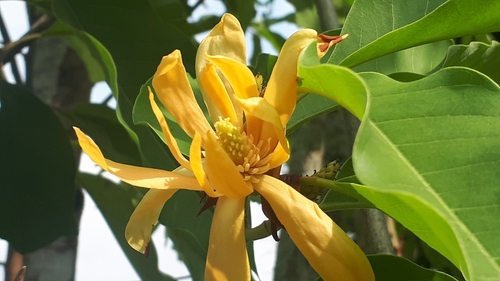
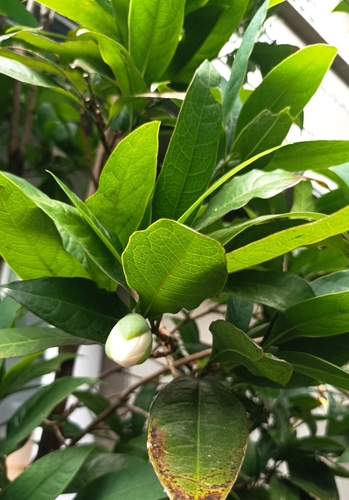
Magnolia compressa
Maxim.
MagnoliaceaeLeaves
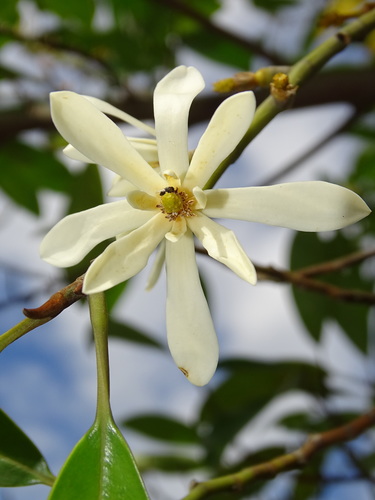
iNaturalist · cc0
no rights reserved, uploaded by 葉子
no rights reserved, uploaded by 葉子
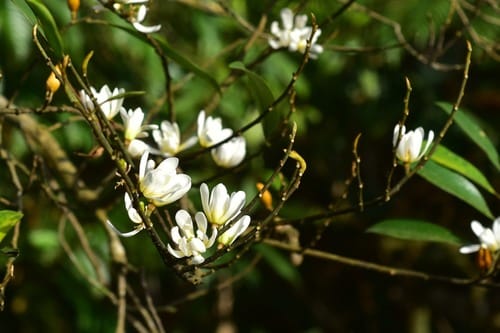
iNaturalist · cc-by-nc
(c) galanhsnu, some rights reserved (CC BY-NC)
(c) galanhsnu, some rights reserved (CC BY-NC)
What to Eat
Edible parts: Leaves
The leaves are eaten.
Where to Find It
It is a temperate plant.
Asia, China, Korea, SE Asia,
Countries: United Arab Emirates, Afghanistan, Armenia, Azerbaijan, Bangladesh, Bahrain, Brunei, Bhutan, China, Georgia, Indonesia, Israel, India, Iraq, Iran, Jordan, Japan, Kyrgyzstan, Cambodia, North Korea, South Korea, Kuwait, Kazakhstan, Laos, Lebanon, Sri Lanka, Myanmar, Mongolia, Maldives, Malaysia, Nepal, Oman, Philippines, Pakistan, Qatar, Saudi Arabia, Singapore, Syria, Thailand, Tajikistan, Timor-Leste, Turkmenistan, Turkey, Taiwan, Uzbekistan, Vietnam, Yemen
How to Identify
A temperate tree in the Magnoliaceae family that grows approximately 17 m tall, with fruit measuring 3-5 cm across.
Wikipedia
Source ↗Magnolia compressa is a species of flowering plant in the family Magnoliaceae, native to Yunnan, Taiwan, the Ryukyu Islands, and southwest Japan, and introduced to South Korea. A small tree when in cultivation, it is hardy only to USDA zone 10. It may be planted in containers and brought indoors in the winter. An aporphine alkaloid contained within Michelia compressa is called michepressine [25454-85-7].
Names & Synonyms
Michelia compressa (Maxim.) Sarg.and others
References (1)
- Woo, Y., et al, 2017, Antioxidant Potential of Selected Korean Edible Plant Extracts. Hindawi BioMed Research International Volume 2017, Article ID 7695606 (As Michelia compressa)