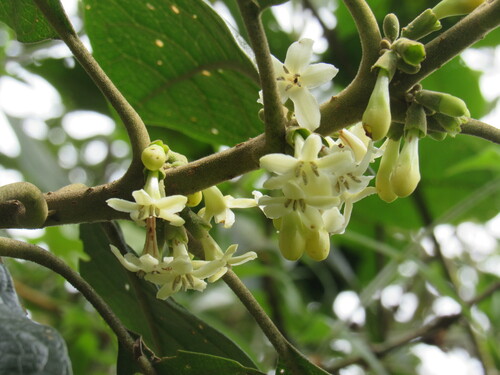
Isodon coetsa
(Buch.-Ham. ex D. Don) Kudo
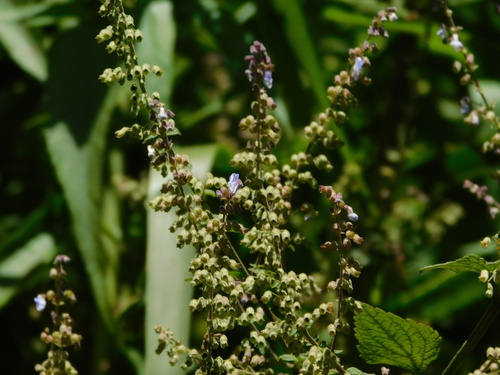
iNaturalist · cc-by-nc
(c) Ganjar Cahyadi, some rights reserved (CC BY-NC), uploaded by Ganjar Cahyadi
(c) Ganjar Cahyadi, some rights reserved (CC BY-NC), uploaded by Ganjar Cahyadi
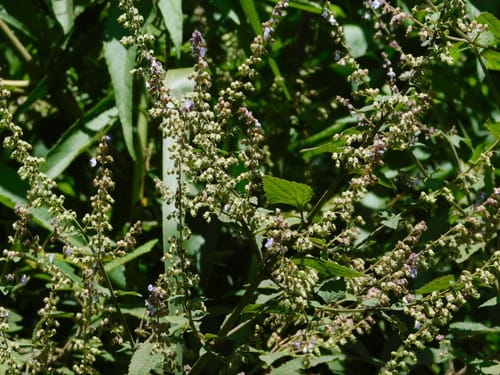
iNaturalist · cc-by-nc
(c) Ganjar Cahyadi, some rights reserved (CC BY-NC)
(c) Ganjar Cahyadi, some rights reserved (CC BY-NC)
What to Eat
Edible parts: Leaves, Leaves - tea
The leaves are used for tea and the plant is cooked with meat as a potherb.
Where to Find It
It is a tropical plant. In Yunnan.
Asia, China,
Countries: United Arab Emirates, Afghanistan, Armenia, Azerbaijan, Bangladesh, Bahrain, Brunei, Bhutan, China, Georgia, Indonesia, Israel, India, Iraq, Iran, Jordan, Japan, Kyrgyzstan, Cambodia, North Korea, South Korea, Kuwait, Kazakhstan, Laos, Lebanon, Sri Lanka, Myanmar, Mongolia, Maldives, Malaysia, Nepal, Oman, Philippines, Pakistan, Qatar, Saudi Arabia, Singapore, Syria, Thailand, Tajikistan, Timor-Leste, Turkmenistan, Turkey, Taiwan, Uzbekistan, Vietnam, Yemen
How to Identify
A small shrub. It can grow 2 m tall. It has many branches. The leaves on the stem are opposite. The leaves are oval and 3-9 cm long by 2-6 cm wide. There are teeth along the edges. The flowering panicles are 5-15 cm long and there are 3-5 flowers.
Names & Synonyms
Nu ha ma
Elsholtzia javanica BlumePlectranthus coetsa Buch.-Ham. ex Don.Rabdosia coetsoides C. Y. Wuand several others
References (1)
- Luo, B., et al, 2019, Wild edible plants collected by Hani from terraced rice paddy agroecosystem in Honghe Prefecture, Yunnan, China. Journal of Ethnobiology and Ethnomedicine 15:56 (As Rabdosia coetsoides)