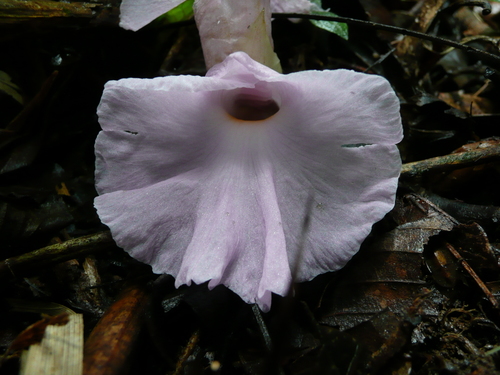
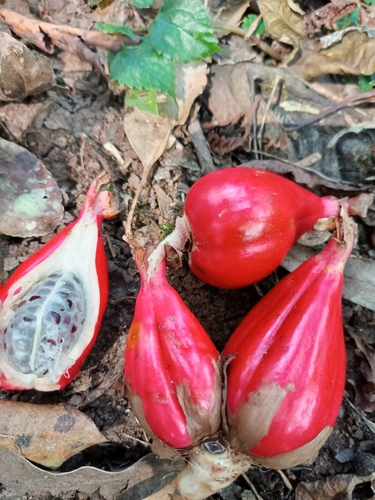
Hedychium ellipticum
Buch.-Ham. ex Sm.
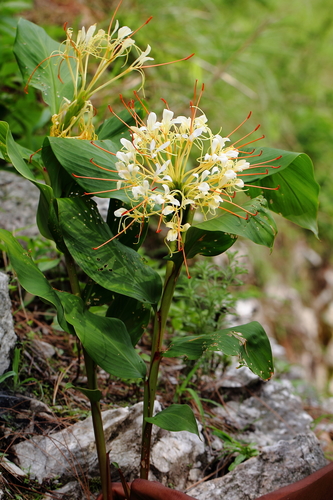
iNaturalist · cc-by-nc
(c) Suresh Ghimire, some rights reserved (CC BY-NC), uploaded by Suresh Ghimire
(c) Suresh Ghimire, some rights reserved (CC BY-NC), uploaded by Suresh Ghimire
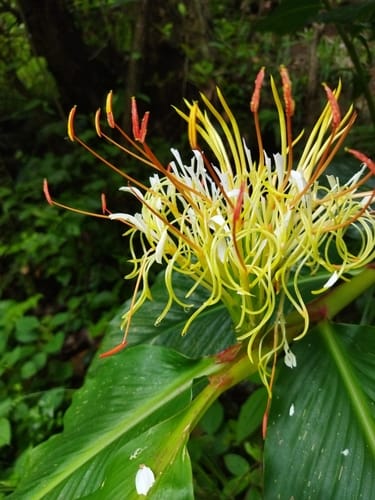
iNaturalist · cc-by-nc
(c) aasisbidari, some rights reserved (CC BY-NC)
(c) aasisbidari, some rights reserved (CC BY-NC)
What to Eat
Edible parts: Young shoots, Rhizome, Roots
The young rhizome and shoots are cooked and eaten as a vegetable. The roots are also edible.
Where to Find It
It is a tropical plant.
Asia, India,
Countries: United Arab Emirates, Afghanistan, Armenia, Azerbaijan, Bangladesh, Bahrain, Brunei, Bhutan, China, Georgia, Indonesia, Israel, India, Iraq, Iran, Jordan, Japan, Kyrgyzstan, Cambodia, North Korea, South Korea, Kuwait, Kazakhstan, Laos, Lebanon, Sri Lanka, Myanmar, Mongolia, Maldives, Malaysia, Nepal, Oman, Philippines, Pakistan, Qatar, Saudi Arabia, Singapore, Syria, Thailand, Tajikistan, Timor-Leste, Turkmenistan, Turkey, Taiwan, Uzbekistan, Vietnam, Yemen
How to Identify
A tropical herb in the ginger family (Zingiberaceae), grown for its edible rhizome and shoots.
Names & Synonyms
Dosu pa
Gandasulium ellipticum (Buch.-Ham. ex Sm.) KuntzeHedychium fastigiatum Voigt.
References (2)
- Lokho, K. & Narasimhan, D., 2013, Ethnobotany of Mao-Naga Tribe of Manipur, India. Pleione 7(2): 314-324
- Meitei, L. R., et al, 2022, An ethnobotanical study on the wild edible plants used by forest dwellers in Yangoupokpi Lokchao Wildlife Sanctuary, Manipur, India. Ethnobotany Research and Application 23:15