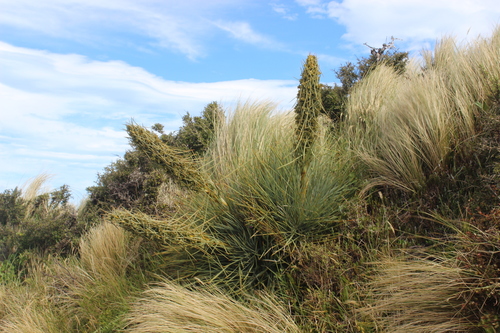
Ferula bungeana
Kitag.

iNaturalist · cc-by-nc
(c) B.Byambajav, some rights reserved (CC BY-NC)
(c) B.Byambajav, some rights reserved (CC BY-NC)

iNaturalist · cc-by-nc
(c) Kherlenchimeg Nyamsuren, some rights reserved (CC BY-NC)
(c) Kherlenchimeg Nyamsuren, some rights reserved (CC BY-NC)

iNaturalist · cc-by-nc
(c) Kherlenchimeg Nyamsuren, some rights reserved (CC BY-NC)
(c) Kherlenchimeg Nyamsuren, some rights reserved (CC BY-NC)
What to Eat
Edible parts: Leaves, Stems, Flavouring
The leaves and stems are boiled and used as seasoning.
Where to Find It
It is a temperate plant.
Asia, China, Mongolia,
Countries: United Arab Emirates, Afghanistan, Armenia, Azerbaijan, Bangladesh, Bahrain, Brunei, Bhutan, China, Georgia, Indonesia, Israel, India, Iraq, Iran, Jordan, Japan, Kyrgyzstan, Cambodia, North Korea, South Korea, Kuwait, Kazakhstan, Laos, Lebanon, Sri Lanka, Myanmar, Mongolia, Maldives, Malaysia, Nepal, Oman, Philippines, Pakistan, Qatar, Saudi Arabia, Singapore, Syria, Thailand, Tajikistan, Timor-Leste, Turkmenistan, Turkey, Taiwan, Uzbekistan, Vietnam, Yemen
How to Identify
A herb. It grows 30-60 cm tall. The stems are slender. The leaves at the base are in a ring. They are oval or triangle shaped and divided. There are a few leaves on the stems.
Names & Synonyms
Shan hui xiang
Peucedanum rigidum Bunge
References (2)
- https://en.wikipedia.org/wiki/List of wild edible plants in Mongolian cuisine
- Sachula, et al, 2020, Wild edible plants collected and consumed by the locals in Daqinggou, Inner Mongolia, China. Journal of Ethnobiology and Ethnomedicine (2020) 16:60