Cyperus alatus
(Nees) F. Muell.
CyperaceaeRoots

iNaturalist · cc-by-sa
(c) Nicola van Berkel, some rights reserved (CC BY-SA), uploaded by Nicola van Berkel
(c) Nicola van Berkel, some rights reserved (CC BY-SA), uploaded by Nicola van Berkel

iNaturalist · cc-by
(c) Henry de Lange, some rights reserved (CC BY)
(c) Henry de Lange, some rights reserved (CC BY)
What to Eat
Edible parts: Bulbs
The bulbs are edible.
Where to Find It
It is a tropical plant.
Africa, East Africa, Kenya, Somalia,
Countries: Angola, Burkina Faso, Burundi, Benin, Botswana, Congo (DRC), Central African Republic, Congo (Republic), Cote d'Ivoire, Cameroon, Cape Verde, Djibouti, Algeria, Egypt, Eritrea, Ethiopia, Gabon, Ghana, Gambia, Guinea, Equatorial Guinea, Guinea-Bissau, Kenya, Comoros, Liberia, Lesotho, Libya, Morocco, Madagascar, Mali, Mauritania, Mauritius, Malawi, Mozambique, Namibia, Niger, Nigeria, Rwanda, Seychelles, Sudan, Sierra Leone, Senegal, Somalia, South Sudan, Sao Tome & Principe, Eswatini, Chad, Togo, Tunisia, Tanzania, Uganda, South Africa, Zambia, Zimbabwe
How to Identify
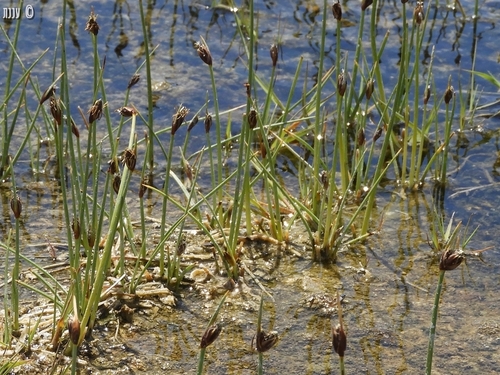
A sedge. It has bulbs. It grows in tufts. The short underground stem or rhizome produces several stems and leaves. The stems are 10-70 cm long and 0.4-1.7 mm thick. They are angular or triangle shaped. The leaves are 5-40 cm long and 2-7 mm wide.
References (2)
- Mutie, F. M., et al, 2023, Important Medicinal and Food Taxa (Orders and Families) in Kenya, Based on Three Quantitative Approaches. Plants 2023, 12, 1145 (subsp. albus)
- World Checklist of Useful Plant Species 2020. Royal Botanic Gardens, Kew
More from Cyperaceae

Actinoscirpus grossus
Giant bulrush, Greater club-rush

Actinoscirpus grossus var. kysoor
Amphiscirpus nevadensis
Nevada bulrush, Great basin bulrush

Bolboschoenus caldwellii
Sea club rush, Marsh club rush, Seaside bulrush

Bolboschoenus fluviatilis
Marsh club rush, River bulrush, Kukuraho, Purua grass

Bolboschoenus glaucus